The main gate at Atlanta's Oakland Cemetery. Photo by me.
After walking in Grant Park on Sunday I felt like I needed more exercise and went over to Oakland Cemetery. Oakland is not only a Victorian cemetery, but is also a city park. Spring is a good time to walk through the vast sea of graves and tombs because of all the flowers and the weather is not too hot yet by Georgia standards.
Photo by me.
Photo by me.
I stopped my walk to smell the roses. These roses remind me of my childhood home. We grew these exact same roses in their delicate light pink shade. These roses are faintly fragrant and come with nice sized thorns, I know because I cut myself many a time as a child on that rose bush. If not pruned these roses will grow into massive bushes. The one at my childhood home was humongous and covered one entire corner of our house.
Add caption
Photo by me.
These are a different variety of roses that were in bloom at the grave of Margaret Mitchell Marsh and her husband. Margaret Mitchell as she was better known was the author of a little book you might have heard of called, Gone With The Wind. She was killed in 1949 on Peachtree Street in Midtown Atlanta when she was run over by a drunk driver by the name of Hugh Gravitt.
The daughter of Mr. Gravitt published her own book in 2013 from her family's perspective about the accident that killed Margaret Mitchell. In her book she alleges that Margaret Mitchell was possibly murdered by her own husband John Marsh by pushing her in front of the car driven by Gravitt. She claims Gravitt was railroaded in court and it was not her father's fault that Mitchell was killed by his car. I have not read the book, but it sounds like a modern day conspiracy theory/nonsense cooked up to sell books to me. The reviews on Amazon make the book sound rather laughable.
Photo by me.
Photo by me.
Photo by me.
There were so many blooming plants and bushes that I did not take time to stop and photograph them all. I did stop to admire these beautiful irises that were in their full grandeur. That deep purple color is so rich.
Photo by me.
I stopped by to take a look at the massive sculpture of a sleeping lion cradling the Confederate flag. The sculpture is for remembering the unknown Confederate deaths during the American Civil War.
I enjoy walking in Oakland Cemetery for the peacefulness of the place and various sculptures that adorn the graves. Oakland is one of my favorite places in Atlanta.
It was a Saturday morning without a plan or a need for one. This past Saturday I cooked oatmeal for breakfast, had my coffee and put my feet up. It was going to be a lazy morning as I listened to Bill Evans Trio's albumSunday At The Village Vanguard. It might not have been a Sunday but I could pretend. Mellow was the mood as the morning came by, through and over me. There was no rush to do a thing as the dense humidity was building outside and the hot temperatures were brewing across the city.
I wanted to be the smooth notes of the piano and the bass and not be bothered to be bothered about a thought of anyone or anything. So the morning was just what I wanted as if I had ordered it out of an expensive catalog made of thick, slick paper.
A walking trail at Mason Mill. Photo by me in May 2018.
A beaver dam on the South Peachtree Creek. Photo by me in May 2018.
It would be late afternoon when the peak of the heat had climaxed before I decided to go beyond my door. I went for my regular walk at the South Peachtree Creek Trail near home. I did it from end to end and back again to make my goal of four miles for the walk.
I enjoyed the walk through the trees, over the creeks, to the sound of the singing birds and with the fading sun.
My lazy Saturday was not so lazy after all.
I woke up early this morning and went out when the moon was still full in the constellation of Virgo and enjoyed the quiet of the city. Now the sun is rising as I sit down to write this with my coffee after breakfast. I have not written here this week so I thought I would take some time this morning to put down some words.
Inman Park Festival drinking, 2013. Photo by me, April 2013.
Later today I am headed to my favorite festival of the year in Atlanta and that is the Inman Park Festival. I used to do this festival with my former friend Rod, but he's moved to Arizona. We would spend the day at the festival people watching and enjoying the day with beers in our hands.
I dedicated six hours to watch that Netflix documentary, Wild Wild Country, that has been getting so much press lately. The film is about a cult that moved from India to a remote area of Oregon in the 1980s and built a commune. It is a wild story including attempted murders, poisoning an entire town, 90 Rolls Royces, greed, power and sex. However, it did not need to be six hours long and could have used a better framed editorial perspective instead of letting so many lies go unchallenged. It was not a very good documentary series. Of all the big stories of the 1980s I do not much remember this cult and their activities but then again this was in Oregon and no one paid much attention to Oregon then and that was a world away from where I grew up. I think people are acting as if this was a bigger story now and than it was at the time. It was probably a blip on the radar screen of new stories that would get buried in the last ten minutes of the national evening news.
The fashionable 80s cult in Oregon. Wild, Wild Country.
The part that I found most interesting were the clothes the cult members had to wear. If you were a member of this cult you had to wear the same color as everyone else. When it was India they all wore orange and when they came to the United States they changed colors to a more burgundy color. Their clothes were the coolest thing about this cult. They look so fashionable and stylish in their cult clothes and notice how skinny everyone was. The food we ate in the world was much more healthy back in those days. No one in my family was overweight and it was uncommon then to see overweight people, unfortunately diets and lifestyles have changed and now so many people are overweight.
Here's one of my favorite of John Lennon songs, Nobody Told Me, from which I borrowed a lyric for the title of this post.
This Sunday morning outside my front door I listened to the cardinals sing and watched them feed and play or maybe they were fighting for territory, I'm not sure.
Every year about this time the cardinals come through in their pairs, they are always in pairs or couples, and they sing, feed and nest in the cedar trees. I enjoy the cardinals.
The cardinal was the favorite bird of my late grandfather on my mother's side of the family. He had bird feeders and enjoyed watching the birds. I like the cardinal too for it is red and that's a rebellious color in nature's color palette.
The cardinal is a common bird in the eastern half of the United States and what I find most interesting about them is that the male is more red and brightly colored than the female. The female cardinal is a more subdued red and has brown feathers too. I suppose the male is more red so that he might attract more potential mates but that's only a guess on my part.
Last week I watched The Death of Stalin. The film is a comedy set around the death of Soviet leader Joseph Stalin and the power struggle that ensues. It was mediocre. There was so much absurdity around the real death of Stalin and the characters that surrounded him that there was plenty of comedic material to work with yet this film never takes full advantage of it. The pacing is glacial at times and the film drags along in several scenes and you must wait forever to find any humor. The film is banned in Russia which isn't surprising. I wish the film was more absurd because to portray Stalin and his absurdity you need go full throttle absurd to even reflect an ounce of how crazy his reign truly was.
Tom Boring. Photo by Eggleston.
On Saturday I read and thoroughly enjoyed this essay in Oxford American about famous photographer William Eggleston and his friend Tom Boring. The essay is a story of chaos, decadence and debauchery that only true Southerners can achieve. I love tales like this.
I am well familiar with the photography of Eggleston as he may be the most famous living American photographer at the moment and his wonderfully crazy life but I was not familiar with Tom Boring.
Tom Boring it seems was just as colorful and outlandish if not more so than Eggleston. You would expect Eggleston to have crazy friends especially in his younger days and so the essay introduced me to what might have been his closest friend. Tom was a fellow southerner living in Greenwood, Mississippi from a good background, served in the navy and became a dentist. I could never do justice to Tom's story like the linked essay does but I certainly want to know more about him now after reading it.
There's also a mystery about Tom's death in 1980. It seems Tom may have had enemies and his burned and beaten body was found in the ruins of his burned down house in Greenwood. The local police didn't seem to give a damn about the murder and now claim the records from that time were also lost in another fire. Sure...
I want to know more about Tom Boring, someone should write a book.
And finally...
Photo by me, March 2018.
I couldn't get enough of the shadows this morning on my dining room floor. I stood and admired them for several minutes and finally took a photo. The sun on the wood floor and the shadows of my palm plants made me think of a hot summer day in Florida. The chair legs at the top of the photo make me wonder what has taken place in this room. Of course I know what takes place there because I eat there but if I weren't familiar with the room and chairs I would wonder about the people that have sat there in those spots.
Wonderful it was looking at these photos in The Cut from someone I had never had of before. Antonio Lopez was glamorous and knew glamorous people and that shows in his photographs. Looking at the photos which were made with an inexpensive Instamatic camera they look current because of today's trendy use of filtered photos made to look old through applications such as Instagram or Lightroom. Lopez's photos though are authentic and are shot on 110 and 126 film like the first film I ever used in the early 1980s. However, my photos are nothing even remotely as interesting or glamorous as his since he was a glamorous person that knew glamorous people in a glamorous time in New York and Paris with disco and outrageous fashion dominating that cultural period.
Lopez wasn't a photographer by trade but instead he was a fashion illustrator. He did work for Vogue, Harper's Bazaar, Interview, Elle and the New York Times. He was however friends and neighbors with the legendary photographer Bill Cunningham. Lopez was actually friends with lots of famous people from the 70s and 80s jet set from Jessica Lange, Grace Coddington, Pat Cleveland, Jerry Hall, Karl Lagerfeld, Grace Jones to Tina Chow among others. Being surrounded by that much intense star power in that decadent time will provide plenty of glamour to photograph.
You can view more of his photos at the Danziger Gallery website and in person too when a show opens next month displaying his photography.
Though I am aware of and familiar with all the names surrounding Antonio Lopez, I wasn't familiar with him until today. He died at the age of 44 in 1987 from complications from AIDS. He was another victim of that time when AIDS was new and ravaging the creative world unabated.
A documentary covering a time in Lopez's life in the late 60s and 70s has been made and I will have to go see it. The film is called Antonio Lopez: Sex, Fashion and Disco.
It has been apparent since January of 2017 when the orange nut job became president that our government was not to be trusted in anything they say or do. We are watching our freedom and institutions die every day before our eyes and nothing is being done about it. The Democrats are a feckless bunch and the Republicans as have been for decades are only out for the money and covering their own asses at the expense of us the people.
Just before the Soviet Union collapsed under Gorbachev the people there no longer believed in their government; they knew it was all absurd lies and so they didn't trust their leaders. After the collapse under Yeltsin all of the industries were gobbled up by oligarchs and power was consolidated into the hands of only a few. This may be what becomes of the United States. What was once unthinkable is now possible and that is that this country is over as we know it.
I'm a fan of the films that BBC documentarian Adam Curtis has been doing for years in trying to make sense of and offer a better understanding of the world we live in today. In one such film, Pandora's Box, he spends an hour discussing what I had written about above in regard to the Soviet Union before the fall. The film like many of his other BBC films is widely available on various video streaming sites such as YouTube.
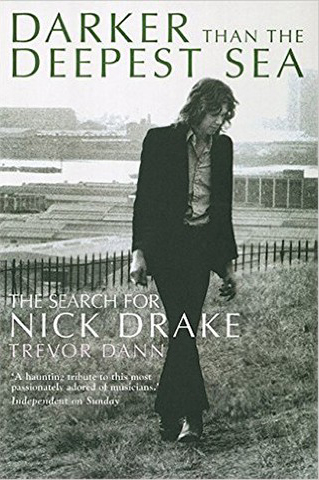
The opportunity presented itself a couple of weeks ago for me to dive back into the world and life of Nick Drake so I put down the book I had already started and picked up another Drake biography. I had recently read the biography of Drake by Patrick Humphries and when I came across a copy of Darker Than The Deepest Sea (published 2006) by Trevor Dann I couldn't resist it.
Nick Drake's world is a confusing and depressing place filled with beautiful music but reading two biographies on his life in a short span may have been too much for me. Still, reading Darker Than The Deepest Sea was a pleasure and it went quickly as I finished it in just two days. There's only so much information to mine about someone that lived so short a life and in a time when we didn't keep digital records of everything we do so if you've read Humphries' biography on Drake you aren't going to learn much new in this book.
Between the two biographies of Drake I found the one of Humphries to be more comprehensive and interested in dissecting every song by Drake versus the book by Dann which is more casual in its writing style but perhaps more updated having been published later with more accurate details about mostly minor things.
I did get a better sense of who young Nick was as Dann spends more time writing about Drake's public school days. For instance, I learned that Nick was a disinterested student that was barely accepted into college at Cambridge having to take his exams twice and waiting another school term. Without some pleading on his behalf from staff at his public school Drake would have never gotten a spot at Cambridge.
This book advances the idea that Drake was schizophrenic and that his drug abuse exacerbated his mental problems. Plenty of reference is made to the copious amounts of marijuana that he smoked for several years and again the idea that he was a user of heroin. The idea of him using heroin though has never been confirmed by any witness in anything that I have read about Drake. It is certainly possible that he used heroin given who he was hanging out with and that heroin seemed to fit his personality. This speculation is much different than in the Humphries biography which has Nick's friends strongly denying that he was ever known to have taken heroin.
But then Nick was a mystery to even his friends so whether he was a heroin user or not or whether he was gay or not (yes, this book too speculates on his sexuality) they simply cannot do anything more than speculate themselves like the rest us decades after his death.
People that were friends with Nick have felt like they never knew him well with his enigmatic comings and goings. So certainly none of the rest of us are ever going to figure the man out decades after his death no matter how hard we try. The dark and deep sea that was the life of Nick Drake is still a mystery. I say enjoy the music he left behind for that is what matters most and that was what made me discover him in the beginning.
This book is a good companion piece to the more in-depth biography written by Humphries. If you are a Drake fan of course the book is worth your time and if you for some reason have to choose between reading the Humphries biography or this one I would go with the one by Humphries.
So many smart and timely articles have been published recently about the terrible and dangerous ways Facebook is acting that I thought I would share three that I happened across today without even seeking them out.
The first article is from BuzzFeed News about how Facebook partners with the anti-democratic government in Cambodia in silencing dissent.
Excerpt:
When Facebook first came to Cambodia, many hoped it would help to usher in a new period of free speech, amplifying voices that countered the narrative of the government-friendly traditional press. Instead, the opposite has happened. Prime Minister Hun Sen is now using the platform to promote his message while jailing his critics, and his staff is doing its best to exploit Facebook’s own rules to shut down criticism — all through a direct relationship with the company’s staff. Facebook has also dramatically reduced the reach of independent media in Cambodia after it decided last year to silo off their content as part of a controversial experiment. The company said this month it would make similar changes to News Feeds for users worldwide.
The second article is from Gizmodo and is about how Facebook spies on you and can track you by the dust on your cell phone camera lens. Really? Yes, really.
Excerpt:
It might assume two people knew each other if the images they uploaded looked like they were titled in the same series of photos—IMG_4605739.jpg and IMG_4605742, for example—or if lens scratches or dust were detectable in the same spots on the photos, revealing the photos were taken by the same camera.
The third article is from Vanity Fair and it touches on the potential downward spiral that is ahead for Facebook. I certainly hope Facebook faces a downward spiral and I do believe it is in trouble with users in Europe and in the United States but it may be overly optimistic in predicting a dramatic drop off in users like Myspace experienced. Facebook has long sought to increase its user base in Asia and that is where their growth, if they see any, will come from. I hope people in Asia are wise enough to avoid the Facebook trap.
Excerpt:
When Zuckerberg looks into his big-data crystal ball, he can see a troublesome trend occurring. A few years ago, for example, there wasn’t a single person I knew who didn’t have Facebook on their smartphone. These days, it’s the opposite. This is largely anecdotal, but almost everyone I know has deleted at least one social app from their devices. And Facebook is almost always the first to go. Facebook, Twitter, Instagram, Snapchat, and other sneaky privacy-piercing applications are being removed by people who simply feel icky about what these platforms are doing to them, and to society.
I have none of those applications on my phone and when I did I never allowed them to access my contacts because it was none of their damn business. I haven't had the Facebook app on my phone in years.
I'm still torn on having a Facebook account at all at this point, I don't ever use it but still it exists and that bothers me. I have deleted it before and then joined again six months later with a new account. This time if I delete my account it will be permanent with no going back.
Updated to add 1/15/2018:
Today in Davos at the World Economic Forum, George Soros made a speech on the dangers of Facebook on the human mind and the threats to society. Here's an excerpt from an article about his speech in the Guardian:
“This is particularly nefarious because social media companies
influence how people think and behave without them even being aware of
it. This has far-reaching adverse consequences on the functioning of
democracy, particularly on the integrity of elections.”
In addition to skewing democracy, social media companies “deceive
their users by manipulating their attention and directing it towards
their own commercial purposes” and “deliberately engineer addiction to
the services they provide”. The latter, he said, “can be very harmful,
particularly for adolescents”.
“The power to shape people’s attention is increasingly concentrated
in the hands of a few companies. It takes a real effort to assert and
defend what John Stuart Mill called ‘the freedom of mind’. There is a
possibility that once lost, people who grow up in the digital age will
have difficulty in regaining it. This may have far-reaching political
consequences.”
Soros warned of an “even more alarming prospect” on the horizon if
data-rich internet companies such as Facebook and Google paired their
corporate surveillance systems with state-sponsored surveillance – a
trend that’s already emerging in places such as the Philippines.
The South Peachtree Creek Trail and some of the large houses that overlook it. Photo by me, January 2018.
The streets still showed the battle signs of winter snow being that they were covered in salt and sand but on Sunday it was so warm you would have thought it was spring. The sudden warmth and deep blue sky lured the world or at least Atlanta out of its winter hibernation. I had planned to go for a long walk and apparently all of the city had the same idea which was to put on shorts and get outside, it was that warm. On Sunday the high reached 68 F (20C) and we had not seen weather this warm in a very long time.
I had entertained the idea of heading north to the mountains but I knew the trails would be busy with people out with the same idea during this warm break. There was also the federal government shutdown so I knew some hiking areas would be closed because they are federally managed and during government shutdowns those areas get closed.
I decided to go walk in my regular walking spot at the South Peachtree Creek Trail which is nearest where I live and it is a pleasant place. Every household in my part of the city had the same idea and I have never seen this trail so busy as I did on Sunday. I know how crowded the Atlanta Beltline becomes on weekends so I rarely walk there and on Sunday the South Peachtree Creek Trail was just as crowded.
One of the less crowded moments. Photo by me, January 2018.
I managed to get in two miles on Sunday which was not as long as I had hoped but the time was slipping by quickly and I had other things to do.
I detoured off the trail to the graffiti covered ruins of the old Decatur Waterworks which I had not been down to see since 2011. I took some photos of the place as I wandered around looking at the pretty colors. I noticed some of the old walls had come down since I had last been down there seven years ago.
Photo by me, January 2018.
Photo by me, January 2018.
Photo by me, January 2018.
Photo by me, January 2018.
Photo by me, January 2018.
Photo by me, January 2018.
Photo by me, January 2018.
Photo by me, January 2018.
Photo by me, January 2018.
Photo by me, January 2018.
Photo by me, January 2018.
I am glad to see that they are still allowing people paint on the ruins. Having an area like this with the old ruins and colorful walls is a cool place to explore and not feel like the entire world has been sanitized.
In
1956 a group of nine Russian hikers, mostly college students at Ural
Poly-technical Institute, died under mysterious circumstances while
camping in winter on the side of Holatchahl Mountain. Their deaths have
been commonly referred to the Dyatlov Pass Incident which is derived from the name of the leader of the group Igor Dyatlov.
I had heard about the Dyatlov incident before and even had watched a
documentary on it and a movie that was partly based on the story. Most
of what you read on the internet about Dyatlov is conspiracy theory and
borders on the absurd. When there is an absence of information about an
interesting story that void will often be filled with wild conspiracy
theories and the Dyatlov story is no different. People have floated
theories that aliens killed the hikers, the government was behind it,
local tribesman or escaped convicts murdered them or that one of the
group members went into a jealous lover's rage and did it. I had always
felt that science one way or another would come to solve this mystery
and that seems to be so.
The book I chose to read about this was Dead Mountain: The Untold True Story Of The Dyatlov Pass Incident (2013) by author Donnie Eichar. Ok, don't let that awful title that reads like a crappy made for television movie on Lifetime
dissuade you from this book because it is fairly thorough and
interesting. Eichar isn't the greatest writer and the book shakily
begins talking too much about himself but it improves as it goes along.
So if you can get beyond the narcissism there is a good story here.
The book does a well at explaining how and by whom the investigation was
conducted and it also does well at putting the time in which this
incident took place into context with the government of Nikita
Khrushchev.
This book provides a look into the backgrounds of the hikers and
explains at how well prepared they were to take on the challenge of
winter hiking in the Ural mountains. I learned from reading this that I
had a few things in common with the leader of the group Igor Dyatlov,
we both loved photography, hiking and radio communications. It was nice
to learn about the hiking club at the university and the levels of
hiking classification it offered to members. I do wish it had gone more
into the Mansi people but that might have been too much of a diversion for the book so there is something for me to learn about on my own I suppose.
If you want to cut through the internet conspiracy theories and read a
well researched account of what happened at Dyatlov Pass then this is a
good book for just that. You will find more information compiled in this
book and photos of the group than you can from reading websites about
the Dyatlov Pass Incident.
The book does come to its own conclusion as to what happened to the
hikers that night on the mountain. The theory he postulates is one that
involves meteorology. With help from NOAA scientists in the United
States and a friend of the author in Russia they suggest that infrasound and a Karman vortex street
as a result of the landscape and weather that night is what compelled
the hikers to abandon the safety of their tent and die as a result. The
treeless dome shaped mountain with wind blowing over and downsloping
over it created twin vortices which resulted in infrasound. That
infrasound had negative consequences on the hikers in their tent with a
low humming sound that caused confusion, panic, possible physical pain
and forced them out of the tent into the cold night. Some died from
hypothermia and some died from a combination of falling into a ravine
injuring themselves with broken bones and hypothermia.
The theory presented is a believable scenario and one I find as a most
credible theory that is based on science to explain the mystery of the
Dyatlov Pass Incident. I would trust proven scientific theory or a
conspiracy theory every time.
T he last weekend of 2017 is here and it's cold, it has been cold for days
now and it slaps me in the face every morning stepping out to start the
day. I have found time for what will probably be my last blog post of
this year and so I'm sitting here with my coffee ready to write.
Last weekend, which was Christmas weekend, I finished reading a
biography of one of my favorite singer/songwriters and that is Nick
Drake. I fell in love with Nick's music about fifteen years ago and I
can't even remember how I first heard his voice now which is a shame.
Nick again was one of those troubled souls that suffered from depression
or a more significant mental disorder perhaps schizophrenia and
ultimately he overdosed in a likely suicide in 1974 at the age of
twenty-six. He died having only completely finishing three albums of
music and never experiencing fortune or fame. His music wouldn't be
well-received and become even remotely popular until well after his
death. I still wouldn't consider him that famous or well known except
for those with cultivated musical tastes that stray from the mainstream
of music. However once you discover Nick's soothing voice, fantastic
acoustic guitar playing and poignant lyrics that draw from nature and
conjure up images of the English countryside you realize you have found
someone special.
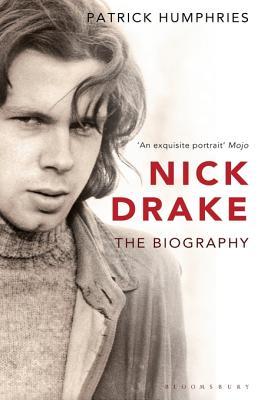
Going into reading Nick Drake : The Biography
by Patrick Humphries (1998) I knew to expect a sad tale and Nick's life
was just that especially in the last four years of his life in London
and then back at his parent's house in Tanworth-in-Arden. I did learn
from reading the book that Nick was a mostly well adjusted child at
boarding school and he even played sports and this is when he became
more interested in performing music. He would go to college in Cambridge
and this is where he became more interested in drugs, especially
marijuana, and somewhere at this point in his life he began to slowly
pull away into his own world. He would leave Cambridge with a year left
to complete his degree to go record his first album and live in London.
In London with a recording contract with Island Records he put out three
albums and had recorded four tracks for another album before he died.
Nick developed a fear of performing live on stage and touring to support
his music so none of his albums were promoted and sold well in his
lifetime. Nick was a paradox in that he wanted recognition but he didn't
want or couldn't do the touring that would have helped him achieve his
dreams.
Nick's mental problems grew in London and he became so detached over
time that he wouldn't wash, would sit and stare at walls, would hardly
speak and was living in a world that was wholly contained within his
head. Yet, despite all that he was a perfectionist on the guitar had a
smooth velvety voice and could write fascinating songs.
The book went through Nick's life with a fine tooth comb despite not
having the assistance of his existing family members to flush out some
of the details. There are many repetitious passages in the book which
were obvious moments of filler but I did appreciate all the insight
provided into the recording sessions and interviews with most of the
people that worked with or were friends with Nick. Overall, I thought
the book was a great read.
If you've never heard the magic of Nick Drake you should give him a try.
One last note about Nick and his personal life which included no known
lovers male or female, I suspect that he was deep in the closet. I think
Nick was gay in deep denial and that was part of his mental problems.
If you look at photos of him he was very fashionable, aloof, incredibly
handsome and he was known to be incredibly sensitive. Somewhere out
there whether in his trips to France or Morocco some guy has a Nick
Drake sexual story to share. Even one of the few women that was close to
Nick in London and admitted to fumbling around with him thinks that he was gay.
I'm not alone in thinking Nick was gay as many have speculated such and
it is even discussed a few times in his biography. Whether he was gay
or not I still love his music and wish he had had a much longer and
better life than he did.
Normally I would hesitate to read a biography about a rock musician or band because you often find that the people that make music you enjoy are flawed people at best or terrible assholes. Then I decided to read Touching From A Distance (1995) by Deborah Curtis about Ian Curtis the late lead singer of Joy Division and my expectations were confirmed that he was a deeply unstable person and he was a terrible asshole too. Just once I would like to read about a musician that was a normal person.
One might argue or suggest that being famous transforms a person into a bad person and damages them in ways that make them unlikable but in the case of Ian Curtis he was an anti-social prick even as a teenager.
The book is written by his wife (who was in the process of divorcing him at the time of his suicide) and she writes that Ian always seemed to have had a death wish to die young. He succeeded in dying young at the age of twenty-three and thus like other rock stars that died young he's been hoisted onto a pedestal like Cobain or Hendrix or Joplin for the simple fact they died young and made some good music. Over time their legend overshadows what music they made in their short lives.
I try not to make heroes out of musicians or worship them because no matter how great their music might be, the people behind its creation will always let you down. It is better to live in the unaware bliss of just enjoying the music for the sake of loving music than learning too deeply about who made it. Disappointment will taint the music you enjoy if you dig too deeply into its creator.
The book relates one story after another of Ian behaving poorly and though his wife repeatedly talks of how overwhelmingly generous he was she only tells one story to support that claim of when he gave a homeless man some food. Otherwise most of the stories are about how selfish a person he was that only seemed to be concerned about himself. He seemed to love and miss the dog named Candy more than he did his own daughter or his wife. He was a man that relied heavily on his wife to do everything in the household and he barely even contributed any money to it though he was becoming a famous rock star. He was off running around with his mistress and holing up in various places with her instead of ever spending time with his family. He was pretty damn shameless in how he acted and when your husband tells you that he no longer loves you standing in the middle of the damn street I think I would be filing for divorce straight away instead of doing his laundry so he can go back out on tour with his mistress.
Ian had mental problems, he had epilepsy too but often it seems like he used those conditions to manipulate the people around him and I wouldn't doubt if he sometimes faked fits to get out of situations. That possibility of faking fits was raised in the book too. Much of his mental problems could have been attributed to self-induced guilt, lying, affairs and maybe even hiding his own sexuality. The man brought many of the problems he had in life upon himself and responsibility was something he seemed to be allergic to.
After reading this book I cannot say that I learned anything good about Ian Curtis. I found it interesting that he would often visit gay bars in his teen years even with his wife, would go to gay parties and he and his wife would joke about him being gay. Ian was also a huge fan of David Bowie and Lou Reed in their glam rock days and would model his dress like them during his teenage years which was a very gender bending look. I have long harbored suspicions about Ian's sexuality so these interesting pieces of information of his time spent in the gay community raised those suspicions further. Even his mistress (this isn't from the book but a separate interview) Annik Honore' in an interview just before her death claimed that the relationship she had with Ian was strictly platonic and never once did they have sex - was she telling the truth?
Despite all of the negative details this book contains I still enjoyed reading it and read the entire book in one day. It isn't heavy reading and you can tell that Deborah Curtis isn't a professional writer but I give her credit for putting out this book if it helped her exorcise any burdens she may have carried since Ian's death in 1980.
I don't see Ian Curtis as some tragic hero/rock god/troubled soul after reading this book but as a young man that helped make some great music but ultimately had more problems than he was willing to face. I love the dark, post-punk music of Joy Division and for that I am thankful that it exists but I wish I knew less about Ian than I do now.
My favorite Joy Division songs are: Shadowplay, Disorder, Atrocity Exhibition and The Eternal.
In the past week I have finished off two books, Almost Transparent Blue and The Cement Garden. Though I enjoyed both books to varying degrees I can't say that either were books that I immensely loved.
I know when reading Japanese books or watching Japanese movies to expect unusual characters and situations when viewed from an American perspective and that is what I appreciate about them. I like life, people and ways of seeing that are different than mine and my world. Differences attract my attention.
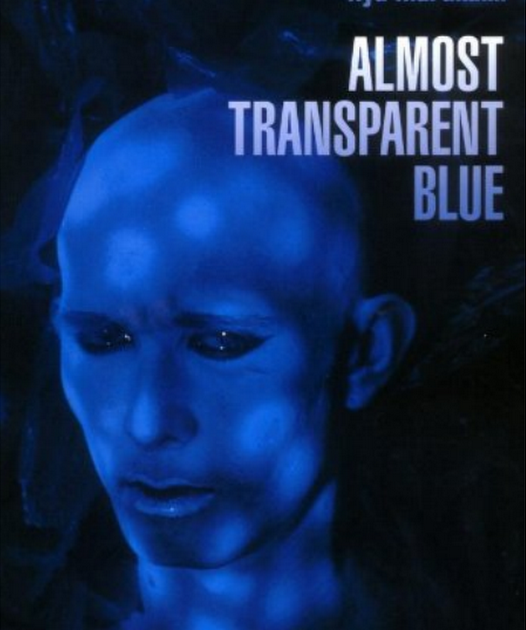
Almost Transparent Blue by Ryu Murakami published in 1976 certainly hit the mark in being another strange experience in Japanese culture. Right from the beginning the main character Ryu is shooting up heroin with his friends in the mid 1970s, using all sorts of drugs and partying like there is no other purpose in life. There are orgies involving American military personnel and Ryu is involved in all manner of sexual pleasure from both sexes (he seemed more like a closeted gay man than bisexual) and more drugs. The plot never strays from his friends and their drug use as it goes from one scene to the next there are more drugs. The story never goes anywhere and neither do the characters no matter the trouble they may get into is isn't very interesting and there's nothing much redeeming happening either.
I enjoyed the book nonetheless but I wish something, anything would have happened that made the book more worth my time.
I began reading The Cement Garden published in 1978 by Ian McEwan knowing what happens in the story because I had already seen the 1993 movie at least a couple of times. I liked the movie and thought the story and acting were compelling.
The story is about four kids (two girls and two boys) who become orphaned when both parents die. Rather than tell authorities when their last remaining parent dies they decide to hide the body in the cellar and continue living alone caring for themselves. They live in a large house in London in a neighborhood that is being leveled for new development and so their house becomes an isolated world surrounded by rubble and nearby apartment towers.
They manage on with their daily lives over a summer through complex relationships with their siblings and an older boyfriend of the oldest girl. The book is about isolation, grief, gender fluidity, gender roles, sex, trust and finally incest. Most of these issues are handled delicately and not in a very graphic manner.
If you've ever seen the movie then don't go into the book expecting to find any aspect of the story to be different. The movie was very faithful to the plot of the book. I did find that since the movie was so faithful to the book that there is very little insight to be gained about the characters having see the movie. Still, if you have never seen the movie then the book is worth reading and I also suggest the movie too.
Above is a photo of the cast from the movie version of The Cement Garden. If you notice on the far left that is singer/actor Charlotte Gainsbourg, she plays the role of the eldest female in the movie. Charlotte is of course also known as the daughter of the French legend Serge Gainsbourg.
I have enjoyed the music of Charlotte for years and just recently she released a new album which is excellent. The new album is called Rest. Here is one of the songs that I particularly enjoy from the new album called Ring-A-Ring O' Roses.
The guy in the video is absolutely adorable too and it is Charlotte's son.
Over the last month I have picked up my reading pace again. I finished three books.
The last one completed was the one I enjoyed the most and that was Stasiland by Anna Funder. It appealed to me because of my interests in the former East Germany and the Berlin Wall. The book is more about the East German secret police known as the Stasi than it is about the Berlin Wall but you cannot write about East Germany without the wall being a central figure so there was plenty of interesting details that I learned from this book about the wall that I didn't know before.
One of the other books that I read was No One Left To Lie To: The Triangulations of William Jefferson Clinton by Christopher Hitchens. My exposure to Hitchens had been his essays and watching appearances of his before he died and he and I share the same views on religion. This was the first book of his that I had read and while it was interesting and I mostly agree with him about Bill Clinton it wasn't all that great of a book. I don't believe in criticizing a person for their sexual desires and so much of this book focuses on just that. Hitchens does write about other criticisms he has of Clinton but there was too much time spent on his alleged affairs because I don't really care about that. I will have to give Hitchens another chance by reading some of his other books.
Lastly, the other book was Amusing Ourselves To Death: Public Discourse In The Age Of Show Business by Neil Postman. This book which is a critique of the television industry and what it does to society originally came out in 1985 and it is even more relevant today in the age of television and the internet. The basic idea is that television is bad for you and makes you dumber by watching it and that I agree with. I gave up all television years ago because I just cannot stand the shows and the ways news is presented today. My take on television news is that they spend more time giving opinions on the news than actual reportage of the news thus I read all my news. In the age of fake news and living in real life Idiocracy this book is a must read for its sanity. There may be all kinds of technological innovation in our lives but damn I feel like we are getting dumber and meaner as a society day by day.
Next up for me on the reading list is a Japanese book called Almost Transparent Blue. I enjoy Japanese literature and film so I am looking forward to starting this book this week.
And Such
I've been exploring the discography of the band Chumbawamba. They were mostly known for Tubthumping but their music was highly political. They were actually a bunch of anarchists so that's interesting and they made other good music than just their hit song. The two albums I have liked the most are Anarchy and Never Mind The Ballots...Here's The Rest Of Your Life. If you need some inspiration during these dark political times I suggest giving their music a try.
n the early 2000's when my career and life were stressing me out I became interested in meditation. I do not know if I was ever successful at achieving any type of higher level of consciousness or insights, but I was able to relax.
I would meditate with music playing and sometimes with incense burning to help set the mood. One of the albums I regularly listened was 1984's The Pearlby Harold Budd and Brian Eno that was produced by Daniel Lanois.
The Pearl is an ambient album that reminds me of floating in the ocean and staring upwards at the sky. Listening to it with closed eyes is like letting the music become the warm ocean water washing underneath your body as you drift aimlessly in the waves.
I stopped meditating for the last ten years or so because I could not make time for it or I just felt as though I did not need it any longer. Sometimes life takes us away from the things we need so that we can experience other aspects of life and that is what happened to me. Eventually or rather hopefully we return to the things that are good for us so now I am returning to meditation.
That return to meditation is what reminded me of The Pearl. I had long since forgotten this music until one day it reentered the forefront of my mind like an errand I had forgotten or a friend that had disappeared and then returned. Listening to it today, it still has the same peaceful calming effect that it did all those years ago.
Time slows down and then evaporates listening to this music, everything takes on a shade of blue and whatever was bothering me is lost in the deep end of the ocean of my mind.
My favorite track on the album is Late October followed by the title track The Pearl.
The Pet Shops Boys during filming of West End Girls.
The
summer of 1986 was coming to an end as I was riding in the back of my
father's van with my brother and two cousins. The radio was playing the
latest hits from a station I liked called KZ 106. We were coming into
the city of Chattanooga and the air was thick with smog; that summer had
been miserably hot and stifling when on the radio came the new number
one song in the country, West End Girls by the Pet Shop Boys.
I heard it as a thirteen year old boy and thought, 'this is different
and I like it.' There was something in the lead singer's voice that my
ears picked up on that I identified with. I knew I was gay and my early
teen gaydar was hearing something I liked.
That song and that moment has since been frozen in time in my mind. I
can't hear that song today without going straight back to that polluted
day in Chattanooga.
1986 was the year of the Space Shuttle Challenger explosion that I watched live on television because I was home from school that day because of snow. It was the year of the Chernobyl explosion
in the Soviet Union which still fascinates me today. Senile Reagan was
President, cold hearted Thatcher was Prime Minister and Gorbachev was
beginning to open up his country with glasnost. AIDS
was still spreading like wildfire and was still largely misunderstood. I
was in middle school, my parents were separated and this period to me
felt dark and gloomy.
I was the nerdy gay kid in the gifted program living in the country
thirty miles from Atlanta. I had already learned to never expect too
much from the world, my parents had made sure of that. I had a
girlfriend, but I was secretly eyeing all the boys in school and had many
crushes hidden in my closet. I was starting to become fascinated by
cities, distant places and like most teenagers music was where I
escaped. I watched MTV every afternoon after school and every night
listened to the Atlanta radio stations like Z-93 and Power 99. Radio and
MTV were exciting and creative back in those days.
Scene from the music video.
Watching the video for West End Girls
set on the streets of London you can see that gloominess that I
associate with that time. It might have been gloomy but still it felt
exciting to me. And seeing the faces that were behind the music of West End Girls confirmed my feelings that this was the music of my tribe and where I belonged.
This wasn't the shiny pop music of Madonna or Wham! and it wasn't about
love or sex or partying but instead was about a city, that city being
London. This song felt different to me. It felt different much like INXS
from that same time period felt and sounded different to me when
compared to what was dominating the airwaves at that time.
Little did I know at the time but the version of the song that would
become a radio hit and launch the Pet Shop Boys wasn't the original
version. The song had been previously recorded in New York in 1983 and
then released in 1984. The original producer was Bobby Orlando who was
well known for producing club music in the 80s.
The 1984 version of West End Girls became a hit in the gay clubs of San Francisco and Los Angeles. That club success however didn't translate to radio airplay.
The 1984 single cover for West End Girls.
Not seeing much success with the Bobby Orlando version of West End Girls
it was recorded again and re-released in the fall of 1985 and that is
the version that would reach number one in the U.K. and the United
States.
I prefer the Bobby Orlando version though I also love the 1985 radio hit
version too. The Bobby Orlando version sounded much more like a club
song of the time, has a darker sound to it and the vocals are delivered
in a more spoken/rap manner than sung.
The song resonates with me because of the lyrics
that are about dissatisfaction, alienation and the overall mood of the
song is dark. There was plenty of dissatisfaction to go around in U.K.
society under Margaret Thatcher and her reforms to the public sector in the 80s. Thatcher made life miserable for many, many people much like Reagan.
"In a West End town, a dead end world
The East End boys and West End girls..."
This world and I have changed a vast amount since 1986 for better and worse, but I still love this song.