Monday, April 10, 2017

Dispatch: Dinners, Berlin, Cats, Bunnies And The Hiding Stranger

Atlanta Monday evening. Taken from a webcam.

The evening was unfolding and I was relaxing by listening to shortwave radio. I had found a station out of the U.K. and they were playing The Devil Inside by INXS. Their music sounded better today than it did back when it was new in the late 80s. I liked the band then but compared to today's rock it holds up well. That song is a playful jaunt and devious too, I like it.

My quiet and contemplative mood that has taken hold in me since last fall is still lingering in me. I went to a couple of dinners in the past week and noticed I wasn't all that engaged in the conversation. I was spending too much time listening and not enough time taking an active role but I guess it doesn't much bother me. This was the most socially active I have been since October last year.

One dinner was a friend's birthday dinner and another was a going away dinner for yet another friend that is moving to New York. I think I know more people in New York now than I do in Atlanta.


I saw this Berlin poster a couple of weeks ago on a blog that I read from time to time and I fell in love with it. I would love to have a large wall poster version of this. My fascination with Berlin remains strong.


I have watched a couple of interesting movies: If Cats Disappeared From The World and How To Draw A Bunny. The movie with cats in the title was a sentimental Japanese movie that I often enjoy. It was a sad emotional story about a young man coming to terms with his mother's death and his own impending death. I didn't cry but I was close to tears near the end.

How To Draw A Bunny is a documentary about the artist Ray Johnson. I must admit I was only slightly aware of him and his oddly composed signature bunnies. His collages were interesting though  and very intricate like a complex puzzle. The documentary explores his life from stories about his friends and how he was on the New York art scene and his curious personality until his death in 1995. His death received speculation that it was maybe his final piece of performance art or just an ordinary suicide by an elderly man. I lean towards thinking his death being an intentional mystery in which he wanted it to be another piece of art.

There is one mystery that I am trying to understand in my life and that involves some odd guy that I have caught twice hiding outside my fence watching me. The first time I pretended not notice him hiding and I went inside. I then watched out the window as he got up from his hiding spot at the fence and then quickly walked down the sidewalk once he thought I didn't see him. The second time I caught him hiding at the fence watching me I decided to make it obvious that I saw him and stood outside my door and stared at him. Finally he realized that I was watching him watching me and he ran away down the street.  It worries me some because I don't know what this is about. I don't think he is going to attack me but is he trying to watch my place and break in? If I see him again I might confront him or maybe not. I am sort of enjoying this cat and mouse game with this strange guy that sometimes hides at my fence. I don't know enough about the situation yet to involve the police.

Friday, February 24, 2017

Wormsloe On The Isle of Hope

An April morning at the front gate of Wormsloe on the Isle of Hope. Photo by me, April 2016.

The Isle Of Hope on the Georgia coast has been claimed by various Native American tribes from the Yuchi to the Creeks to the Yamacraw and it was then the territory of Spain before colonists from England arrived in the early 1700s. The English established the nearby city of Savannah in 1733.

The Isle of Hope is just outside the city limits of Savannah and is surrounded by muddy salt marshes on all sides that are fed from the Atlantic Ocean. The island is a small one only four miles long and two miles wide.

The first English settler on the Isle of Hope was Noble Jones in 1736 who built his home there beginning in 1739 through 1745. He built a fortified house on the tip of the island overlooking the Skidaway Narrows to defend against any Spanish attacks.

Wednesday, February 22, 2017

Warhol And His Pop Polaroids

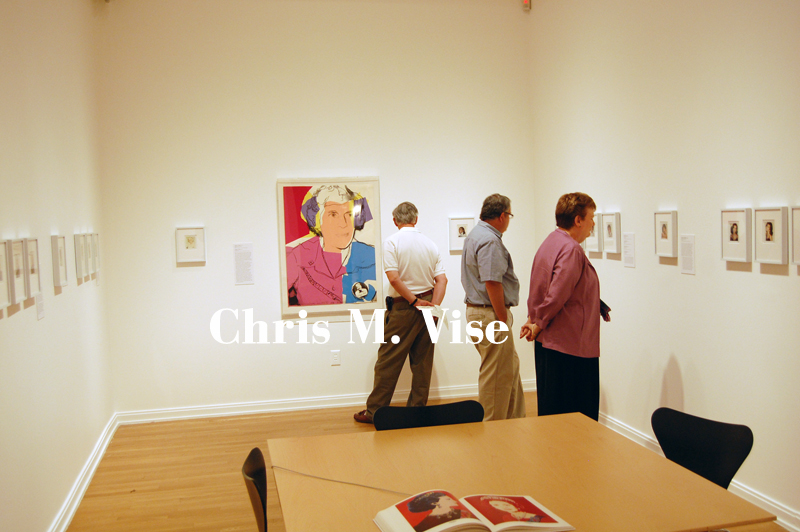
A Warhol exhibit at the Michael C. Carlos Museum. Photo by me, October 2008.


N

early twenty years ago, in 1998, I went to see the Pop Art: Selections Of The Modern Museum of Art exhibit at the High Museum in Atlanta. I remember it being a big event in the city, going right after it opened and I remember how popular it was. It was a well attended exhibition as much hype as it garnered and how thick the crowds were. I was eager to see all the works of Andy Warhol that were on loan and to see how much color and glamour there would be on display in this exhibition. 


Warhol was a huge art star and personality in the 1990s, even though he died in 1987. I knew who he was, had always heard of him, seen some of his work in books, magazines and television. Warhol even had a 1980s television show on MTV when I was a kid, he was as known for his image as he was known for his art. It was cool to like Warhol and I had not even seen any of his work in person. In my excitement I purchased a High Museum hat that day from the museum store and I am not much of a baseball cap person.

After the exhibit, I remember not being impressed by the art of Andy Warhol. It was colorful, there was a glamorous veneer to it, but that was it - it was a veneer and offered no depth or meaning. 


Since 1998 I have seen plenty of his work in person at various museums around the country and I still cannot find it in me to like his work. It has always seemed like it was the cool thing to like Warhol and that is not enough for me to praise his work if I do not like it. People seem to overlook or might not realize that Warhol was not a painter, but was a screen printer of photographs and that diminishes his work. Further, he did not even do the screen printing himself as that was delegated to his staff. That is why his studio was called The Factory after all. Warhol was only the idea man.


In 2008 I was at the Michael C. Carlos Museum on the campus of Emory University in Atlanta and had finished browsing their permanent collection on my way to see a large exhibition of Egyptian artifacts when off to the side I saw a small gallery with a Warhol exhibition. Warhol always seems to attract a buzzy crowd so I waited a little for people to empty out.

Photo by me, October 2008.


This exhibition was called Big Shots, Andy Warhol's Polaroid Portraits. There was an initial curiousity and excitement in me as Polaroids hold a special place in my heart as my first camera as a boy was a Polaroid OneStep.

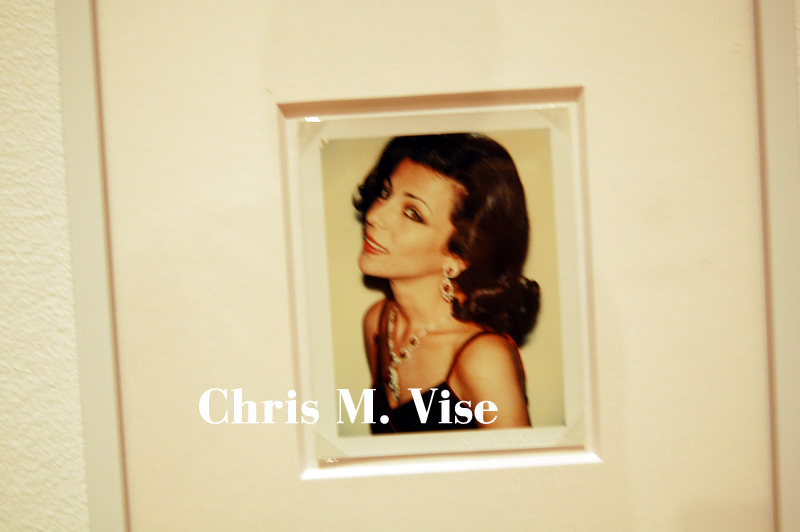
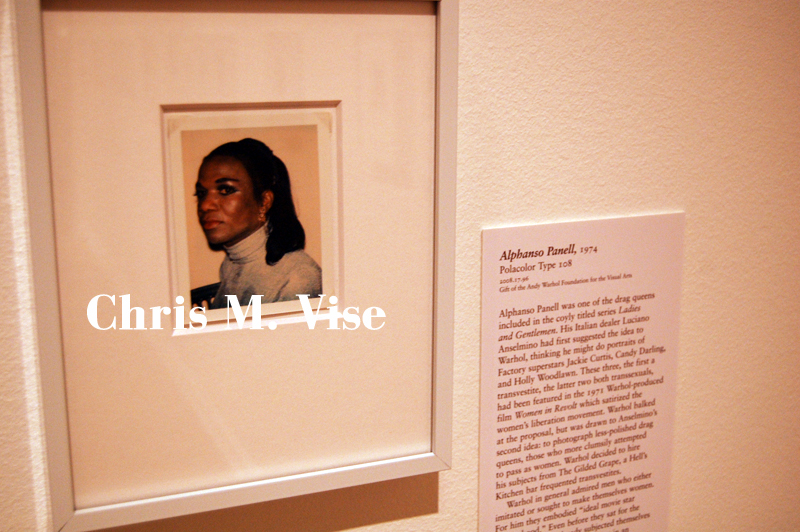
For Warhol, the genesis of his screen prints came from photography. He either photographed his subject or used a photo from a newspaper or magazine as the image for the screen print. In 1970 he bought a Polaroid Big Shot camera for taking instant photos of people. This exhibition was a sample of some of those those shots of various people from celebrities, which he often screen printed to more obscure people he thought interesting.

Photo by me, October 2008.


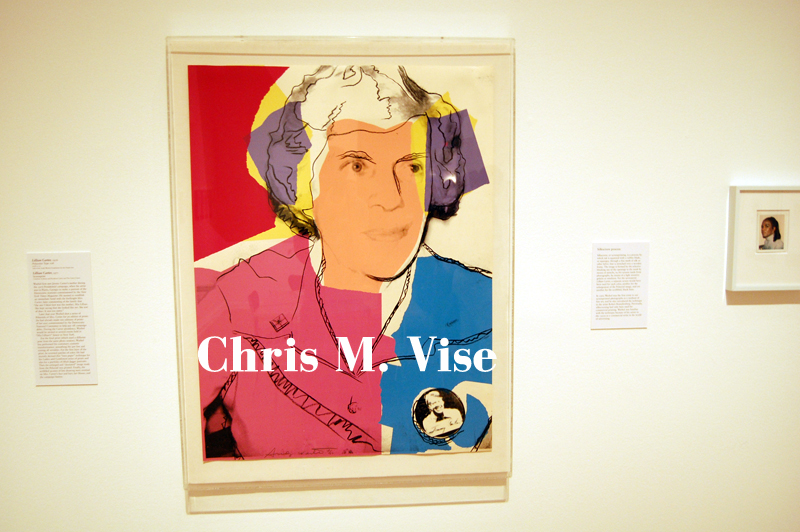
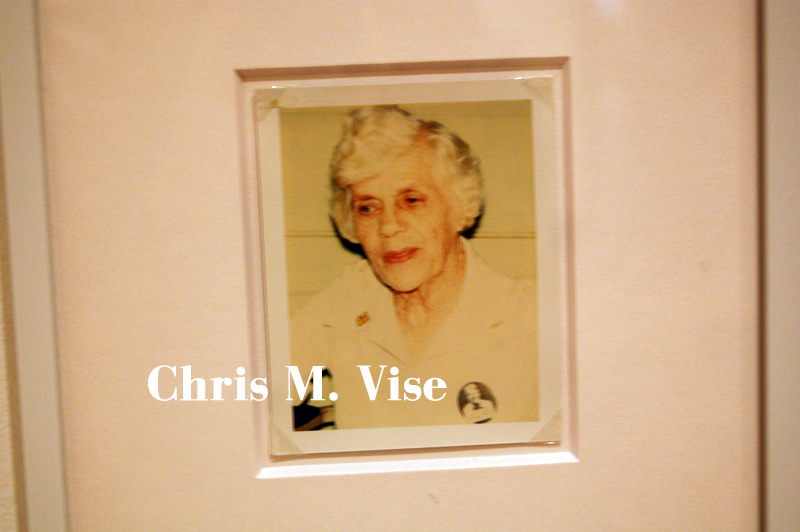
The largest item on display was a screen print of President Jimmy Carter's mother, Lillian. This of course was a nod by the museum to the fact that President Carter was born and still lives in Georgia. A Polaroid that was the basis for the screen print was also on display from 1977. You can see the smiling Mrs. Carter proudly wearing her son's campaign button.

Photo by me, October 2008.


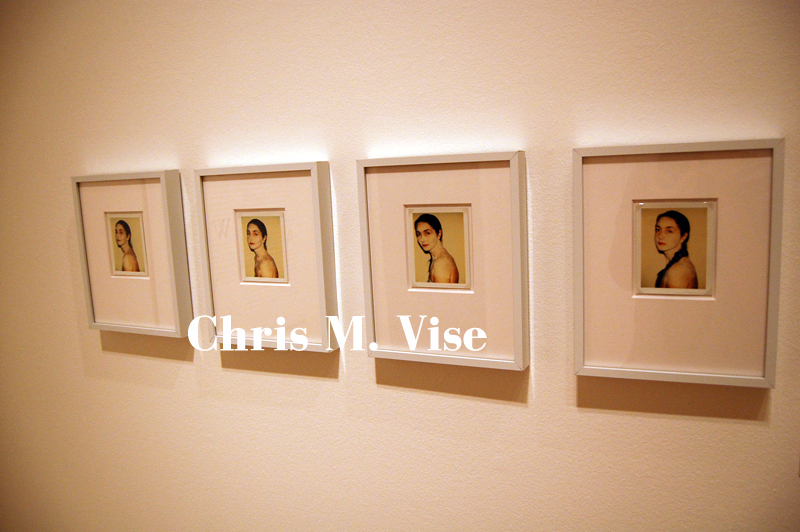
Warhol would typically take a couple hundred snapshots of his subject in various poses before being satisfied that he had want he wanted.

Photo by me, October 2008.

Photo by me, October 2008.

Photo by me, October 2008.

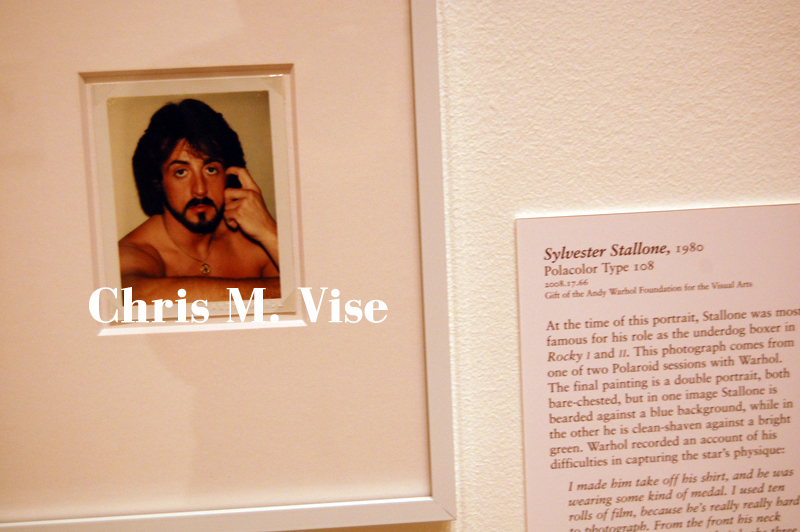
A young Sylvester Stallone in 1980.

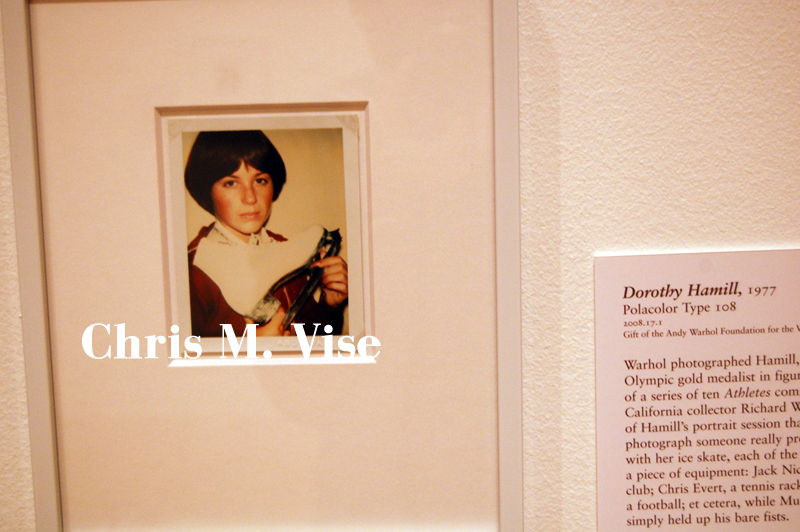
Figure Skater Dorothy Hamill in 1977. Photo by me, October 2008.


Celebrities of all walks were of course his bread and butter for his screen prints like the ones he did of Marilyn Monroe.

Photo by me, October 2008.

The 1981 Mother Goose Polaroid was from a project that never was completed. He had planned to do a series on fictional characters called Myths.

Looking at the Polaroids you get a sense of how Warhol operated and some of his work process. When taking Polaroids of his subjects he was always very close and personal with the camera getting in the space of the person. There is nothing technically special about the photos and there is only so much that can be done with a Polaroid camera anyway.

Warhol famously said, "in the future, everyone will be world-famous for 15 minutes." His prophetic statement related as much to his own art, which was created with such minimal effort by him, as it relates to how easily someone can achieve world-fame today in any manner of ways. In era such as today when narcissism is king and people are famous for whom they are and not what they do or create, Warhol would fit in perfectly. Imagine all the selfies people probably take in front his art. Warhol would be proud.

I am open minded enough that if someone could give me valid reasons for liking his work I might change my mind about his art. Until then, I will continue to see his work in the future and not like it very much.

I still have that High Museum baseball cap from 1998 by the way.


Saturday, February 18, 2017

Zoo Station, An East West Mess


Zoo Station is a well-known train station in Berlin. It was known as a place to find prostitutes and heroin in the 1970s and 80s and was glamorized in books and film such as Christiane F. So when you title a book Zoo Station you might expect that this train station would figure prominently in the book but in the case of Zoo Station: Adventures in East And West Berlin by Ian Walker you find that this train station is mentioned one time in brief passing. When this book was published in 1987 I can only surmise that the title was chosen to cash in on the notoriety of the name Zoo Station.

What follows in the book written by a journalist in Berlin is an account of his time in the city in 1984. The stories aren't so much adventures but more tales of smuggling a poetry book into East Berlin (so devious and wild this author was), rants against the United States, character sketches of people he encounters, and anecdotes about life in both West and East Berlin.

There are many problems with this book and I am not certain if it is entirely nonfiction.

As the book slowly moves along I began to question whether this was nonfiction or fiction or a blending of the two. I suspect that there's more fiction here than truth in this tangled mess. I also began to question the sanity of the author. By the time I reached the middle of the book I felt as though I was reading the ramblings of someone suffering a mental illness. Walker did indeed have problems which he likes to remind you several times and only three years after this book was published he committed suicide in 1990. He jumped from the window of a building in London while shouting that Jesus was coming. A tragic end for sure but in reading this book you could see that he needed help.

About halfway through the book you begin realize that this isn't much a book but more the rambling journal of a mentally ill man. Some of the stories have a certain lack of authenticity about them. I suspect some of the stories are fictitious and either didn't happen as described or never happened at all.

The author repeatedly mentions that he is in financial trouble and keeps referring to unpaid debts back home in London. He mentions them so often you begin to think that he has skipped out and left the country to avoid paying these debts which must have been rather large.

The way he wrote about his love for his much younger girlfriend  Laura was creepy, obsessive and paranoid. He would go on and on about how beautiful she was and how when they would go anywhere together all the men would be staring at her beauty. He would imagine all these men wanting to sleep with her like he did and then he'd go on some insecure and paranoid rant about it. He didn't even like taking her out in public because he was so jealous and paranoid. This was a man in his early 30s but the way he would write about her made it seem like he was a love struck teenager. It was creepy.

Throughout the book Walker is always describing himself as a journalist and he likes to use this title to impress the people he meets in the book. But near the end of the book you find out that isn't even in Berlin on assignment and is there on unpaid leave from the Observer. He claims the unpaid leave was so he could write a book but, cough..cough..I call bullshit. He showed up at a military public relations tour so late, disheveled, hungover and acted so unprofessional that a member of the British military decided to check out his credentials with the Observer because he was suspicious of him. This is when we find out about the unpaid leave and that the Observer didn't even know what he was doing in Berlin and stated that he wasn't on any assignment for them.

To further make me suspect the author's credibility I never believed the authenticity of the character he calls Wolfgang without a last name. He seemed desperate to paint this Wolfgang character as a spy for the Stasi. I wonder if Wolfgang ever existed or was the creation of his imagination. He might of met a person once that people joked was a spy and so he expounded on the idea and developed a character but I really suspect this wasn't a true story. It was if he thought if he could create a story about knowing a Cold War spy he could make the book and himself more interesting. Some of the characters have last names but this Wolfgang's last name was never given which leads me to believe he was fiction. As often as he writes about this Wolfgang and as much as he wants this character to be important you would have thought he could have provided a last name for him. His conversations with this character were often long and detailed like a novel. Knowing that the author was only jotting down notes and not using a recorder I don't believe his memory was good enough to recall such great detail as body language and entire conversations by memory.

Even more curious about Walker's memory he somehow manages to have the exact same conversation with different people in different situations about the arms race and the 'war economy' between the east and west in the Cold War. He isn't the one both times saying these things. He puts the words into the mouths of the supposedly real characters. It happens early in the book at an East Berlin party and then magically near the very end of the book different characters at the British Officer's Club say the near exact same thing. It isn't even plausible that this would happen that these very different people would say the same words in two very different settings.

Then there's the issue of the timeline for this book.

The timeline is very blurry and the author never fully explains just how long he was in Berlin. I suspect he wasn't there for a long time. It seems that he once visited Berlin in 1979, came back to do an assignment in East Berlin with his girlfriend for the Observer and then came back to West Berlin in 1984. Most of the book seems to occur in 1984 which was probably the only time he lived there and that may have only been just a few months. We know at the end of the book he leaves West Berlin but we don't know when that takes place but it seems to be all in the same year. So it is difficult to understand just how well the author even knew Berlin.

At some point after Berlin he runs off to Nicaragua to meet up with a former roommate who was there saving the world. Was the author there just to avoid those debts? Was he there because his young girlfriend that he was obsessed with had left him?

The only thing certain about his stay in Nicaragua was that it was brief too because the book is published in 1987. His time in Nicaragua is also when he writes this book which he mentions was all done from his notes.

Credibility aside the book is tediously boring by the second half. Two unnecessary chapters are more filler in which Walker spends time touring the military installations of the U.S. and British armed forces stationed in West Berlin. Mostly these chapters are recitations of useless facts about the military which no one would find interesting and my eyes glossed over. He offered no context or insight to these numbers and it seemed like these chapters which weren't for the newspaper were just half-assed attempts at research.

Then the final blow of mediocrity is the chapter that Walker doesn't even write himself called Here's Johnny. The chapter is written by one of the friends of Walker that he mentions throughout the book. This Johnny is in no way interesting and is no one important and he never says anything important. Even he begins the chapter by saying, "I am trying to imagine what a western audience would see as the highlights of my life." This Johnny has no last name just like the Wolfgang character and I seriously think he was pure fiction too.

The positives about the book are the descriptions of the city, the people, the contrasts between East and West Berlin, his stories about border crossing procedures, his observations about immigrants in West Berlin and his descriptions of the people and places in the neighborhood of Kreuzberg.

At one point he is riding a bike along the wall in West Berlin and comes to an abandoned Catholic hospital adjacent to the wall. The hospital since becoming vacant had become home to squatters from various nations. The people being squatters were living in precarious conditions and some even had children. Their lives and stories would have made for interesting reading and I kept thinking there's a story worth telling but instead he only mentions it in passing and decides to go climb an observation tower yet again and smoke. What kind of journalist or writer passes up opportunities like this?

Eventually these same descriptions of the train system, meeting the same characters and hanging out in Metropol and Djungel wears thin. For a book to have the word 'adventures' in the title I want some fantastic stories to back up that claim. There never was any adventure. This guy was basically an average guy doing much of nothing in a uniquely interesting city during a period that was once in a lifetime but he was only a hanger on.There's not much of a story here and there is no greater understanding of people, politics or anything really. The book could have been about his own personal journey and struggles or it could have been about life in Berlin but it wasn't a success at either.

Sunday, February 5, 2017

Fashion For The Free Mind


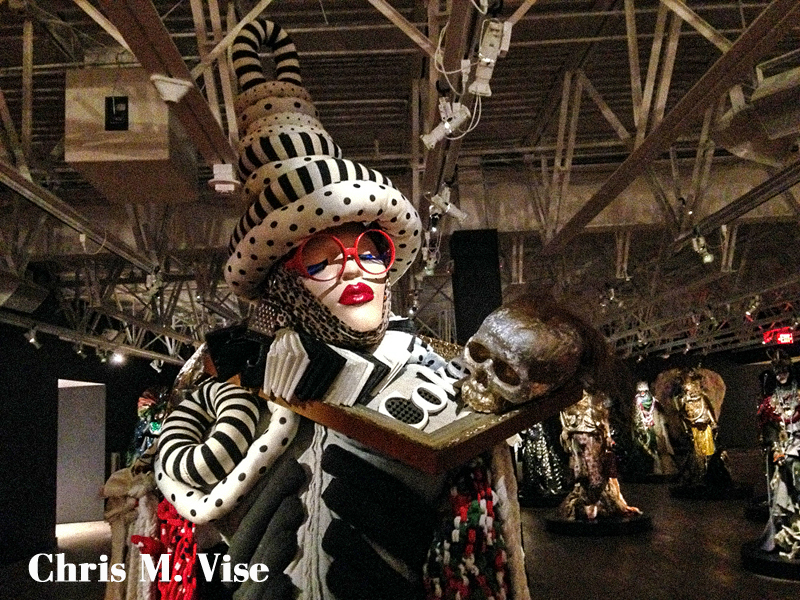
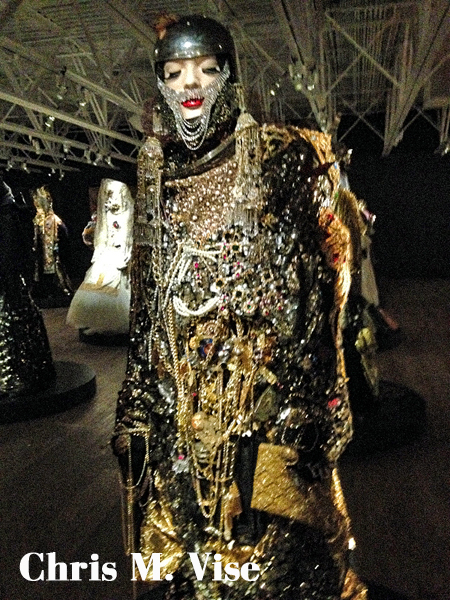
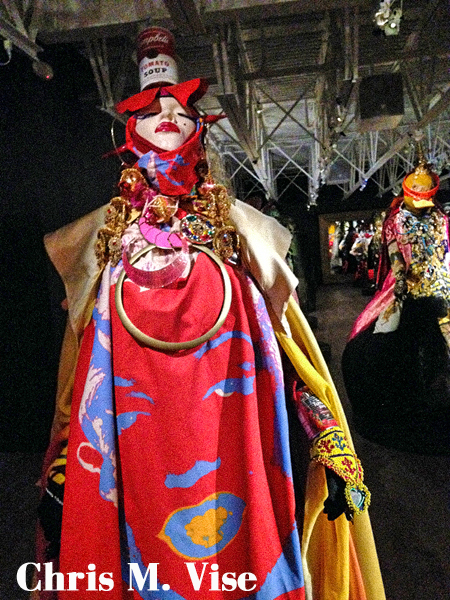
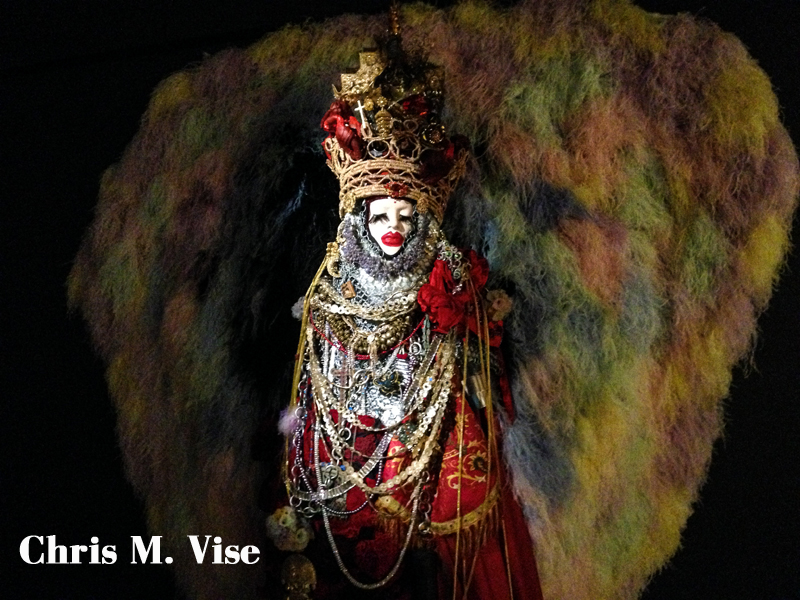
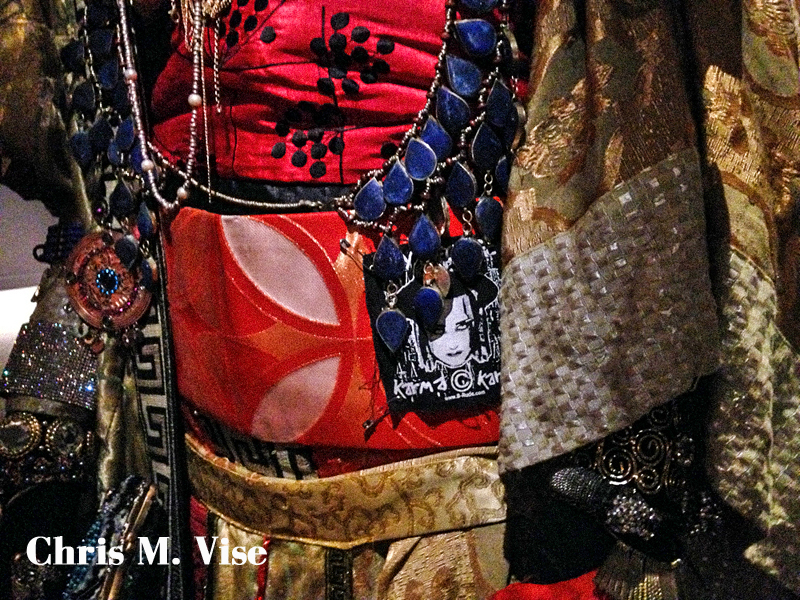
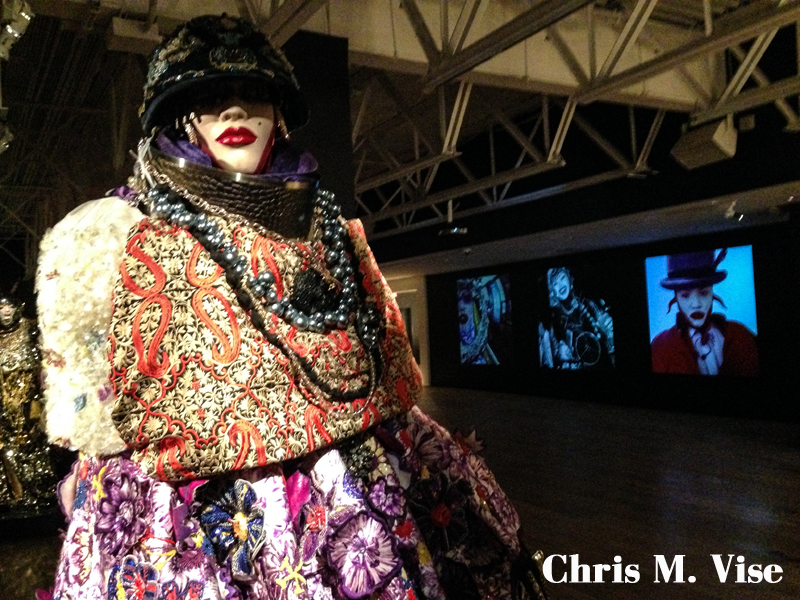
Early February of 2016 I went to the SCADFASH Museum of Fashion and Film in Midtown to see the latest exhibition, Daniel Lismore - Be Yourself; Everyone Else Is Taken. I was not familiar with the designs of Lismore and I was not sure what to expect. The exhibition turned out to be a great and worthwhile suprise.

The exhibition was a spectacle of the outrageous and a marvel of exuberant style. Initially I thought of Boy George and Leigh Bowery while walking among the mannequins all done up in these marvelous outfits. While there might be some influence, Lismore has his own unique style; the work was original and meticulous down to the tiniest details. After the initial viewing of an outfit I would have to go back and study it again to see what was missed, as there were plenty of surprises to be found in these elaborate garments.

Here are a few highlights from the exhibition:

Visually there is so much for the eye take in. You have think about what is on display and admire the creativity and craftsmanship. The Coke logo adjacent to the skull is a nice touch of humor.

This might have been my favorite. I loved the magazine cover around the mannequin's head and the painting over the eyelids. This might be speaking to the commodification of the self with the barcode and the marketing slogan.


A brilliant piece of art. I cannot imagine how much it weighs.


Nods to Andy Warhol with the large Marilyn Monroe print and the Campbell's Tomato Soup can atop the head.


I thought this design was quite beautiful. It reminded me of a more extravagant vision of a bridal outfit that Madonna might have worn in the 1980s.


Another one of my favorites.


I spy Boy George. The textures on these fabrics are incredible.

"I'm not trying to seduce you. Would you like me to seduce you?" That entered my mind as I stood before this. The line is from the film The Graduate and was sampled in the 1992 George Michael song Too Funky. My answer was, "yes."


Daniel Lismore is creative director for Sorapol, a London-based atelier. He was raised in England and studied photography and fashion design. His clothes have been worn by numerous celebrities and he's had his work featured by H&M.

During the Atlanta show, Vogue Magazine reviewed the exhibit which consisted of over three thousand pieces. After it left Atlanta it appeared in Miami in late 2016 as part of a SCAD event there.

Out of all the exhibitions I went to see in 2016 this was my favorite. I left there eyes wide open and couldn't stop thinking and talking about it.


*All photos taken by me in February 2016.

Tuesday, January 31, 2017

In The Naked Winter

Photo by me, January 2017.

T

he rain approached from the north, rolling over the mountains of the Cohutta Wilderness of North Georgia. I did not have much time atop the mountain; with the rain comes the wind. 


If I had been on this spot a week earlier I would have been standing in the snow and bitter cold. By the time I made it up there, the snow was melted and it was me and the skeletal trees in winter hibernation. There may not be a prettier spot in the Georgia mountains, at least there was not on that day. 


I hike to think, I stand on top of mountains and I look at the stars every clear night to dream and wish. In those brief moments the world is all mine like the early morning.

Photo by me, January 2017.


The walks taken in the valleys through the adverse conditions are worth it for the peaks in life, no matter how brief they may be.

Sunday, January 29, 2017

Coming Out In East Berlin


Every so often I am fortunate enough to come across some obscure film that turns out to be a gem. I'm always on the lookout to find some film that few know about and often times these are foreign films or films from decades ago. I was lucky enough to find a film that was both foreign and from the past, Coming Out. The film is East German and was released in 1989.

I will admit that I have this fascination with Berlin in the 1980s and especially East Berlin. A city divided by an armed wall that separated two worlds so vastly different in most every way compels my mind to want to know more. The stark contrasts between the vibrant west versus the drab east of the GDR (German Democratic Republic) were images that I saw quite often on American television news growing up. Visually the east appeared gray and cold and those are two attributes that I find appealing. Though I know life was more difficult in the east at least from a purely aesthetic perspective I found it attractive and have romanticized the isolation.

Scenes of gay life in East Berlin.

Coming Out gives a rare look over the other side of the Berlin Wall into a not very well documented part of what life must have been like being gay in East Berlin. The film shows us the gay bars and the colorful and lively environment inside that was a shelter against the outward grayness of the city. There were the drag shows and bar staff in drag which reminded me greatly of where I live in Atlanta where drag or cabaret as some would call it, is very popular. You see doormen standing behind a sliding window in a door inspecting customers before allowing them inside to make sure they weren't there to cause trouble. American gay life wasn't so different as this tactic was often used to stop or delay police from raiding and arresting patrons. In the film there is the park cruising that would go on and that too was common in the United States during that time. So there were similarities between gay life in East Berlin and in the United States in how underground the scene was back then. There might not have been Gay Pride parades but you find out that gay life in East Berlin in the 1980s wasn't all that different from gay life in America and that is surprising.


The plot of the movie is that of a twenty-something high school teacher named Philipp that begins a relationship with a fellow teacher (Tanja) that had had a crush on him for years. Soon after they begin dating he meets a friend of his girlfriend that turns out to be his gay lover from his adolescence. This chance encounter reawakens his own gay feelings and he is soon out in the East Berlin gay bars exploring his homosexual desires. This is where he meets Matthias and they quickly fall in love. Philipp begins to lead an unhappy double life deciding between breaking it off with his girlfriend or to follow his true love with Matthias.

Matthias


Matthias is somewhat younger at nineteen and soon to be twenty he says and for him Philipp is his first love and he's like a puppy with big eyes following Philipp around. Matthias falls head over heels in love with Philipp and eagerly wants to start a serious relationship with him. Matthias is an innocent character and though he's spent some time in the gay nightlife of East Berlin he isn't jaded like someone with more experience would be. He's very much a refreshing character and you are cheering for him not to have his heart broken. Matthias is the sweet, charming and curious character that I adore.

Philipp

Philipp just coming to terms with his sexuality is the character that is coming out as the title implies. Though he had had adolescent love with another boy he is attempting in his adult life to suppress his true identity and live as a heterosexual man. His family is pressuring him in many ways from family household obligations even though he no lives at home to settling down with a woman. Once he does move in with his girlfriend the pressure weighs more heavily on him that he isn't happy and that he is living a lie.

Through the film we watch as Philipp struggles with his identity in his career and in his personal life. The writing captures well what it is like to first enter the gay scene and how one must find their way into being embraced by your community. It also depicts well how the community can be very accepting and at the same time very shallow and harsh. One of the better scenes in the movie is when Philipp is confronted by an older gentlemen that helps guide him onto the path of self acceptance and beginning to live life in a more healthy way. By the end of the movie, which takes a few unexpected turns to get there, you see Philipp making progress to finding his own path to personal freedom.

One piece of trivia about this film is that on the night the movie premiered in the theatre it was the same night that began the fall of the Berlin Wall on November 9th, 1989. GDR officials announced as the film was playing that the gates to the west were open and residents of the east could freely travel. The announcement on the news that night was cause for a huge celebration and so people rushed to the wall and overwhelmed the guards and police on duty. The crowds were so large that finally officials gave up on checking the documents of everyone that wanted to cross and this lead to the fall of the wall. So on the same night that a film about a gay man finding his own personal freedom premiered it was also the same night an entire country found its freedom.

Saturday, January 28, 2017

Surrealism in East Atlanta

Photo by me, March 2014.

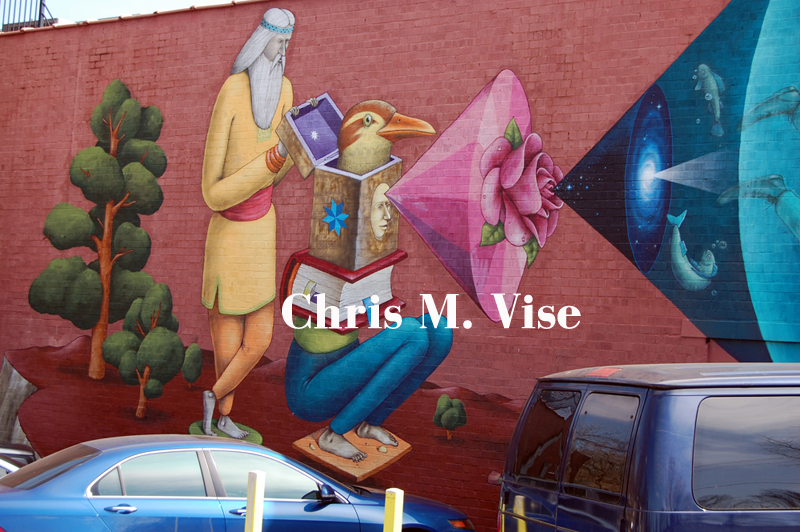
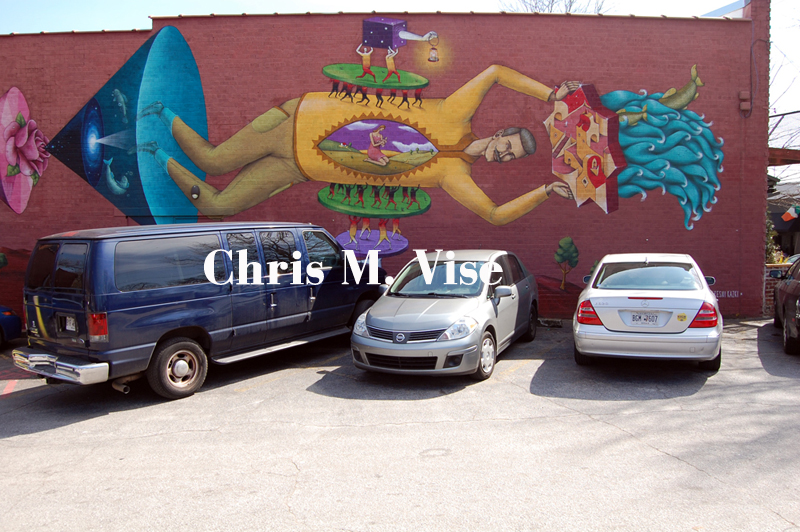
Joe's Coffee was my first stop that morning in the East Atlanta Village for coffee and conversation and then I set off on foot to do some photography. Up from the shop on Flat Shoals Avenue was the Argosy and I peered around the side to find this remarkable mural. The mural was painted in 2012 by the higly-regarded Ukrainian artists AEC and WAONE who go by the name Interesni Kazki. The two have done incredible murals all across the globe.

Photo by me, March 2014.

There is much to digest in this mural and I cannot pretend to understand it.

Looking at it from the left there is the older man opening a box set atop a book and another human form with a bird coming out of the top. A face in the front of the box is projecting a pink rose and from that comes a night sky which leads to the ocean and fish swimming.

Photo by me, March 2014.

Going further to the right the mural evolves with different levels of people supporting each other and a large man at the center with a woman inside set in a pastoral scene. At the very top is an arm outstretched carrying a lantern as if to lead the way. More to the right the largest man holds a geometric shape that has a town or village painted on it with fish entering on the reverse side as if going upstream.

Contained in the mural we have trees, birds, fish, a flower, the stars, the ocean and humans. For me the mural evokes thoughts of evolution of man and nature and how we should support one another in our existence. I could be entirely wrong in my interpretation but that's the intriguing part of art is coming up with our own interpretations.

More about surrealism.