Saturday, November 14, 2020

Behind Dweller On The Boundary: Notes On The Scales Of My Memory

George Michael, Careless Whisper.

 M

any of the memories of my childhood are attached to music. I associate going to kindergarten with I Love The Nightlife and We're All Alone. I can remember going to the zoo in Atlanta's Grant Park for the first time and hearing What A Fool Believes. Most of the real persons behind the characters in Dweller On The Boundary have music associated with them from the period. 


Growing up in a house where the stereo was on more than the television, meant that I was surrounded by music from the 1970s, through the 1980s and it never left me. I heard disco, yacht rock, middle of the road rock, soft rock, R&B and the more pop leaning music that I preferred as a child. My brother, that is different from me by every measure, was into the likes of Ozzy Osbourne, Twisted Sister and AC/DC. My father liked Kool & The Gang, The Commodores, Earth Wind & Fire and Steely Dan. My mother was into Elvis, Billy Joel, Bruce Springsteen, Tina Turner and John Cougar Mellencamp


The first records I ever had were Shaun Cassidy records because of my crush on him and the first record I ever bought with my own allowance was Bill Squire's The Stroke. I must have been talked into buying that record by my brother, I hope so. The second record I purchased with my own money was Paul McCartney's Take It Away. The first concert I went to was Duran Duran's Big Thing tour at the Fox Theatre in Atlanta in 1989. By the time the 1990s rolled around, my tastes dramatically shifted and I was heavily into grunge. There was no bigger Nirvana fan than me. You could not get me to listen to any sort of pop music then without my sneering like it was beneath me. I had pierced my ear, dyed my hair and wrapped myself in flannel. Few people from the past knew me then and I was finding my way.


Country music was scant in my childhood house and you might think growing up in a rural area that would have been different. I suspect the reason was that we received Atlanta radio and television stations and one of those television stations was a local video music channel, WVEU Channel 69. We had MTV in my house very early on, but TV 69 was way cooler and had all of the big names drop by their studios. 


The only country music I remember in my house was the 45 record of Hank William's A Country Boy Can Survive, the 45 of Johnny Lee's Lookin' For Love and an eight track of Alabama's Mountain Music album. Alabama was the only country band that I liked in the early 1980s. Robin's favorite band was The Police, but he also liked Alabama and listened to them regularly. He knew every word to Take Me Down and liked to sing that to me. If you listen to the lyrics of that song, you will understand why. My favorite Alabama song was Dixieland Delight, watching the video of that song is like opening a time capsule with the clothes and scenery from Fort Payne, Alabama which resembles the Paulding County, Georgia that I grew up in. You can go to Paulding County today and it looks like any other suburban county in the United States with four-lane highways, shopping centers and subdivisions, but it was nothing like that when I was a kid – it was country with Confederate flags, hot rods and beat up trucks. I loved growing up in a rural area, but culturally I was a misfit. 


In the constant haze of music in my childhood, I wrapped my memories of events and people around it. Whenever I need to think about the past I can either read my journals dating back to 1985 or I listen to music from that period. Below is a list of the main characters from Dweller On The Boundary and the music I associate with the persons behind them.


My father - I associate Take The Long Way Home by Supertramp with him. The reason is a story that is not in the book and I still am not ready to share. This song was on the radio that night as we came down Old Cartersville Road in New Hope. It was so dark outside and inside the car. I saw something I was not supposed to see or remember.


My mother - I spent more time with my mother than anyone else in my childhood and there was always music. In the 1970s we listened to Elvis most every day and when he died our house went into mourning. My mother had a substantial collection of Elvis records and we listened to them daily in the late seventies. We listened to Separate Ways often and I have to wonder what she was thinking when she played it. My parents liked to send messages to each other through music. My father came home one day with a record and tossed it on the coffee table and told my mother to listen to it, it was Him by Rupert Holmes. As my father began going out alone, my mother would put 50 Ways To Leave Your Lover by Paul Simon on the stereo as he was getting dressed. I suppose my parents thought I was too young to understand or they did not care. Despite the musical weapons, I most associate the Born In The U.S.A. album by Bruce Springsteen with my mother and John Cougar Mellencamp's Uh-huh. She had those albums on cassette and they were the soundtrack to the loneliest times of the 1980s. Born To Run, is her song.


Robin - As an adult, my feelings about the person behind Robin are mixed and achingly complex, but in the context of the book he was the best part of my childhood next to my mother. I loved him and would never wish him any harm. I associate every song by The Police with him, especially Wrapped Around Your Finger and King Of Pain. Of course, I associate Culture Club with him. There is the Alabama song Take Me Down that I mentioned above too, I do not enjoy hearing that song now. 1983, at least the first half, was the best part of my childhood. Irene Cara's What A Feeling came out that spring and it was my favorite song. I would run around with that song in my ten year old head. I was so excited about that song and I wanted Robin to love it too. He hated it. He was changing that year in ways I did not like, but I still loved him. That song was the first thing I liked that he did not and I never could shake that feeling from that day.


Noah - My brother and I were so very different and remain that way today. The song I associate with him is a song he would probably not like. On one of our family trips down to Florida I heard Sailing by Christopher Cross. We left in the early morning hours well before sunrise and I woke up in the back of the Cadillac. The car was dark, the leather seats were cold and my father was driving by the glow of the dashboard lights. My mother was in front of me asleep, I always sat behind my mother and never behind my father. My brother is next to me, slumped over and sleeping. He was a heavy sleeper that could sleep anywhere under any circumstance. My family, at that moment, was the most peaceful it ever was or would be as Sailing played at a low volume on the speakers behind my head. It felt like a dream, but it was not.


Oliver - Oliver and I watched MTV together, but most of the time we were outside playing. Music was not a part of our relationship. It was not until after he was gone, that following summer that I came to associate Smalltown Boy by the Bronski Beat with him. When I heard that song, I knew it was us and I was to never forget.


Peter - The first time I went to his house and my mother was driving me over, we listened to 96 Rock in her truck. As we neared his house, Foreigner's I Want To Know What Love Is came on the radio. I was so nervous and hopeful that day. I also associate Prince's Purple Rain album with him. I received the album for Christmas that year and we both liked it and talked about it often. 


David The Bishop - I was a Bryan Adams fan and even though we never much discussed music I associated his music with this person. The real person behind this character resembled Bryan Adams, but with better skin. I was listening to Bryan Adams often in junior high and Run To You reminds me of this character.


Rowe - Being hunted like a deer and having worse done to you is not something you forget. Welcome To The Jungle is Rowe.


BethI Don't Have The Heart by James Ingram. I had this album on cassette and listened to this song on repeat in my bedroom as I decided what I wanted to do about our relationship. It was more difficult to break up with her than I portray in the book.


Asta - Waiting For A Star To Fall by Boy Meets Girl. I was in love with this song the year that the secret of Asta was revealed. I kept waiting for that secret to drop. 


Tavin - He was a strong influence in my life when music was so important to me and he exposed me to music that I never would have considered before. We listened to a lot of INXS, Love & Rockets, Peter Murphy, The Cure, Echo & The Bunnymen, Depeche Mode and The Psychedelic Furs. The song I most associate with him is Human by The Human League.


Elliot -This character is based on two people, that I thought were my best friends. My relationships with them were much more complicated and painful than what I shared in Dweller On The Boundary. For the sake of storytelling and brevity I could not explore those two relationships as I would have liked. WHAM's Careless Whisper was a song that I often listened with one of them. As cheesy as it might seem with that saxophone intro, we were both huge George Michael fans. The other person behind Elliot I associate with the Johnny Hates Jazz song Shattered Dreams


Chris Rhodes (me) - It was a challenge to think of myself as the inspiration for a character in a novel. I had to ask how much I wanted to share, how honest I wanted to be and worry what people might think of me after they read it. I also had to ask myself if I wanted to relive all that pain and I cried a lot. If I think of the boy that I was growing up and separate the adult version of myself from him, I think that If I Can Dream by Elvis is that character. That boy dreamed beyond the suffering and flew away. I play that song loud for him and remember that I did not share it all.


Monday, November 9, 2020

Human Memory

Sid Vicious

During my election week hibernation from social media I read a couple of books, one about the Lennon and Ono recording sessions for Double Fantasy and a Sid Vicious biography. The book about Double Fantasy was too fluffy and uncritical for my liking. Lennon had some dark sides to him, but you would have thought he was a charismatic snake charmer from reading that book. The book about Vicious was more about the history of punk than a sharply focused history of the man.

Seventies and early 80s punk has long been an interest of mine. I have always been kind of proud that the first U.S. performance of the Sex Pistols was in Atlanta at The Great Southeast Music Hall & Emporium in 1978. (link to a video from that show)

The music hall is long gone and was by the time I moved to Atlanta in 1995, but the shopping center in Lindbergh, where it was located, was still there in the 1990s. It was the only place I can remember that had a two-story Kmart and I purchased cheap Christmas decorations there one year. All that is history too and is buried under apartments and stores now.

Lindbergh is an ugly neighborhood consisting of modern prison looking mid-rise apartments, a MARTA station, big box stores, shopping centers and fast food joints straddling two huge roads, Piedmont and Sidney Marcus. It has the personality of a cheap radio boombox playing Steve Winwood music in a weedy asphalt parking lot. The neighborhood looks temporary and artificial, but of course the rents are high because people want to live in the city even if it means paying too much for a cardboard box. The neighborhood had great potential with the train station and its location sandwiched between Midtown and Buckhead, but it is designed for cars and not humans making it unpleasant and dead. For most, the neighborhood is a place people must drive through to get some better place.

The city that I knew that was more empty, rundown, carefree and cheap has been erased. The period of growth the city has experienced since the 1996 Summer Olympics has come at a price. Society is vastly transformed too, some for the better and some for the worse. We are not as fun loving and free-spirited as we once were and the younger generations that have followed Generation X are different. We had it better then when we could detach from technology, walk out the door and leave the telephone to be taken care of by the answering machine. We had it better then when we could not take photos of everything because we did not carry cameras in our pockets everywhere we went and film was not cheap. We committed things to human memory not a digital one. If we forgot a detail, well it must not have been that important anyway and who would have ever thought of taking a photo of their food for people to comment on later? I am certain I had some incredible meals under seductive lighting in my lifetime, but I never said to myself that I needed a photo of what I was about to chew up and digest.

Back to the election and the turmoil that has followed over concessions, the media, polls and fraud allegations. It is important to remember that political pundits will espouse whatever to continue their sham of a career to satisfy you, politicians will lie to continue sucking on the taxpayer's teat and this is as old as time itself. This too shall pass. The real people of the world, not the power brokers or the television talking heads, are the pawns and all of this gnashing of teeth on social media is for naught.

Saturday, October 24, 2020

The River Of Truth


Little River Canyon, Alabama. March 2011.

The truth is not a cure all as some may think. When preparing to publish Dweller On The Boundary I was told by someone that the truth would set me free. It is a nice sentiment, but not one I can wildly follow like jumping feet first from a cliff overlooking a raging river. 


It would be reckless to embrace the truth with arms wide open, not only for myself, but for those people that the story is inspired by. The truth applied in full force would ruin lives that do not deserve to be ruined. I have no desire to harm people from the past and that was a consideration from the beginning that I have doggedly followed. The truth is dangerous like that raging river below my dangling feet and the old Paulding County that I grew up in which is small and populated with jagged rocks. 


I will not crash onto those rocks because someone thought it was a good idea to be truthful, they have no risk sitting back offering advice from the comfort of their sofa, but I do. I decided from the outset that I would write as much truth as I possibly could without endangering me or anybody else. What I write and publish going forward will abide by the same considerations.


In recent months some thought they were a greater influence on me than they were, that I had not considered what I was doing or that I agreed with them. My mind is not as malleable to them as they thought nor was I asking for guidance. The position I wrote this book from was not a position of weakness or I never would have written it. However, I am strengthening the fortifications around myself to keep those that misunderstand me from securing future distraction or influence.

Thursday, October 22, 2020

My Side Of The Wall


This is a part of my corner of where I live in Atlanta at Emory University/Lullwater. I was out there burning off frustration over the good and bad of social media on Tuesday with a few miles of walking. I was gathering some inspiration too for what is on the horizon in 2021.

Fall is my favorite season and I am so glad that it is here. I love the smell of chimney smoke, the foggy mornings, the cooler weather and the crunch of leaves under my feet.


The kids around here have a had good time over the years making this old mill tower into a colorful graffiti landmark. The nearby abandoned remnants of the old Decatur Waterworks look similar. I prefer this random vomit of graffiti more than I do the planned murals on the side of buildings that promote some type of corporate approved moral propaganda under the guise of art that is all too common the past few years.

I have been listening to Sonic Youth and Echo & The Bunnymen over the past two weeks. Over The Wall is on my mind. I am ready for cold, rain and abandoned places.


Thursday, October 1, 2020

A Letter From Paradise, Let Tomorrow Be

Photo by me, September 2020


This photo is taken at home away from home in Fort Lauderdale, where I am most happy and no place suits me better. It was the best place to recoup after the publication of Dweller On The Boundary. I sat out on the patio for days and watched boats on the canal, lizards play, stray cats hunt, evenings fade into night and the storm clouds boil over the Everglades. I was tired after decades of living with that book. I aged a few years writing it and I am glad it is over, like a fever broke and I can rejoin the world. I am ensconced in Atlanta again and this fall and early winter I plan to wrap up writing the 1980s short story collection and have it out in January of next year. I have a book of poetry I would like to publish too, but who reads poetry? 


I cannot go to Florida and not think about the Christopher Cross song, Sailing. It reminds me of being a boy in the back of the Cadillac sliding around on the cold leather backseat in the early morning hours on the way down to Florida. “It's not far down to paradise, at least it's not for me,” Cross sang. Paradise for me is ten hours away by car from Atlanta. Fort Lauderdale was deserted, it is one of those places that is alive with people year-round and it was not this time for the first time in the eleven years I have been going down. The water taxis were not even running. The coronavirus has kept away the Europeans and Canadians and most of the domestic travelers too. It was nice to have the place to ourselves, but the local economy has suffered with their absence. 


The South Florida weather was in the 90s with soupy humidity and rounds of storms. The weather never panned out for a trip down to Key West, but I've seen it before and it will be there some other time. If you never have made the drive out from Miami down through the Keys, it is one incredible trip down the chain of islands that become smaller and smaller as you go. At some points it is like driving across the ocean. That road is a good reminder of how small we are as humans in the face of nature.


I met up in Florida with someone that I have known for years and they asked me questions about the book and I found it difficult to talk about face to face. Maybe I can't do that after running emotionally naked for three hundred pages. It was easier to let it all hang out on the beach at Haulover in Bal Harbour in front of hundreds of strangers than to say what I wrote. Don't cringe, it was in my younger years that I was lounging on nude beaches. I am terrible at describing the book and simply say, “it is a brutal story.” That seems like a fair and succinct assessment. 


I had planned to read while I was away, but I wrote instead. What was on my mind was the late 80s Joan Didion book, Miami. It is about the Cuban exiles in Miami and the American political machinations involving them. People have this idea of Miami as being this liberal bastion at the end of Florida, but it really is not. The Cuban exiles, which have ascended the local political and business ladders in Miami are reliably Republican voters. Miami is cosmopolitan, chic, dirty like Los Angeles and not the place it appears to be at first glance. Tourists come down and run wild in Miami Beach and South Beach like children at recess with frozen drinks in both hands guzzling them from colorful and grotesquely over-sized plastic cups, but that is not Miami. It is a chaotic mangrove of bad traffic, graffiti, loud music, extreme disparities in wealth and trash filled gutters if you step away from the groomed sandy beaches. There is a messy city beyond Collins Avenue, the glamorous money laundering towers with water views and the walled gardens of Coconut Grove. I hate Miami, it repulses me and I still stare like passing a woman in threadbare and stringy cut offs wearing nothing underneath. Miami is a place for people who think they know Florida, but are willfully ignorant about the rest of the state. I could not get Didion's book out of my head since we are in an election year and Florida is as important as ever to both parties. Both campaigns are advertising heavily on radio and billboards down there, I cannot speak for television since I never watch it, but I assume it is just as saturated. I have an idea who is going to win in November and I'll say no more. We are too divided in this country with nonstop politics even in retail stores like The Gap with window displays of overly serious looking young models telling people to vote like the world is going to end. I am convinced so many people have lost their sense of humor and grasp of reality. We could use some Molly Ivins right about now to lighten things up or Gore Vidal to slice through the horseshit with his wicked tongue. I do not care for whom you vote, that is your decision as it should be. Vote for The Pink Panther or whatever computer is singing the latest pop song on the radio if you wish. 


The 1985 Kurt Russell movie, The Mean Season was on my mind too. The Miami captured in that film is authentic and messy with boarding houses and mobile home parks contrasted against the wealthier neighborhoods. Russell plays a burned out newspaper reporter assigned to the crime beat that becomes intertwined with a serial killer and the police. The movie is based on the novel In The Heat Of The Summer. Crime dramas are not typically my kind of movie as they get too hung up on telling the story from the perspective of the police and fall prey to cliches, The Mean Season is told from the perspective of the newspaper reporter and that makes it more interesting. 1980s Miami is shown from Bill Baggs Park on Key Biscayne to the raw and steamy nature that is the Everglades. You feel the humidity making you slimy as you watch it. You see South Beach seven years before Gianni Versace fell in love with it and turned The Amsterdam Palace Apartments into his personal palace. Like you maybe, I have stood on those steps in the spot where Versace bled to death after Andrew Cunanan shot him in the back of the head like an execution. It is gruesome to think of how that spot is a top tourist destination in South Beach. Mariel Hemingway plays the love interest in the film and there is never enough of her, she was a far better actress than her late sister Marguax. Richard Jordan perfectly plays the role of the creepy serial killer. The movie is not Oscar material, but it captures the feeling of Miami well. 


I prefer Fort Lauderdale, it is part of the South Florida cacophony, but has a different timbre than Miami. It is big, sometimes wild, but more discreet in its plumage than its big brother next door. You can disappear behind the paurotis palms, find a lonely plot of beach at the right time of day to throw down a towel under the rays and watch the yachts idle down the canals. It has its multi-millionaire mansions in spades, a Rolls-Royce showroom on Sunrise Boulevard, marinas stocked with yachts like soft drinks, people begging for change at the I-95 off ramps, check cashing places and broken down places people call home too. The sun beats down hard in Broward as it does in Dade, but enough of the relaxed Florida spirit still exists in Fort Lauderdale that is gone from Miami. Where else can you find the banana man handing out free bananas every day just after noon on Ocean Boulevard, watch fresh fallen coconuts drift by in a canal as you sit on a barge and eat lobster or have a yacht sail by your window at ten at night blaring You Shook Me All Night Long? No place else other than Fort Lauderdale. I do not recommend eating Thai in Amarillo in a place next to a car repair shop, but there are a number of good Thai restaurants in Fort Lauderdale and that satisfies me.


Somewhere between the downpours and the roadside stands selling oranges, pecans and looks at baby alligators around Ormond Beach on a detour to Jacksonville for food, a song entered my head. The acoustic guitar backed by the strings and horns at the intro came at me like the spinning wheels of an eighteen wheeler and a familiar feeling swept over me. I would hear this song in the late 1980s and 90s when I was hanging out and snorkeling in the Panhandle between Mexico Beach and St. George Island. I know Florida just as well as I know Georgia and a few other states, but that's neither here nor there at the moment. There was an oldies station out of Panama City that I listened called Sunny 98.5 and this song was a staple in their playlist. This song reminds me of rain splattered sand on the side of my Z Car from the sand dunes and the smell of wet driftwood. The sunburn of my memories aches every time I have to leave the ocean over the horizon. The song came out before I was born and it is from a different era in American culture, but I connected with it nonetheless. Great music is timeless and crosses the divides of humanity, maybe one day that kind of music will be popular again.


Anyway, I am back and ready to sit at my big wooden desk, enjoy my favorite season, go to the mountains for hikes in the falling leaves and buy some Georgia apples.


Let tomorrow be,


Chris


Tuesday, September 8, 2020

Behind Dweller On The Boundary: Part One

That's me as the book begins, down to the coat and bike in the book.

Since Dweller On The Boundary is a novel inspired by true events, I thought I would write about how the book came to be and some of the background that it stands upon. This is the first in this series.

If you have not read the book, I hope that I do not give too much away in what is written below.

I will begin with myself. I was born in the early 1970s in Paulding County, Georgia in the county seat of Dallas. The new county hospital then was Paulding Memorial, which has since been replaced by a newer and much larger hospital in a very different environment than I grew up. Paulding County of today, is a commuter suburb of Atlanta that was a rural and forgotten place when I was born. Moonshine was still being made in the hills there in the 1970s.

As in the book, I was raised on a pine-covered hill a few miles north of Dallas in the small community of New Hope. It was a place known for its battle in the American Civil War during General Sherman's March To The Sea in 1864. New Hope was a roadblock for Sherman in his quest to go burn down Atlanta. He was forced to detour to Kennesaw Mountain after fierce fighting from the Confederates in a deluge of rain. After that nothing notable happened in New Hope for a long time until the Southern Airways plane crash in the middle of it in 1977. The crash was on the road in front of my elementary school, but thankfully school was not in session at the time.

They deemed me a gifted child early on and I was in the program through elementary and junior high, for whatever reason it was not available then in high school. We did often play chess, take field trips, take lots of tests, play other games and spent plenty of time on the Commodore 64 computers in the library learning BASIC programming. I had a few computers at home throughout the 1980s such as an ADAM, an Atari 400, a couple of Texas Instruments computers and a Sinclair ZX81. I spend little time writing about computers in the book and I wish I had more of an opportunity to write about them, but they did not fit into the plot. I loved computers and spent much of my indoor time on them through elementary and junior high. I was never much of a television watcher after all. I was a rural boy, but I was not a redneck, I was more geek/nerd whatever you want to call me that happened to be fascinated with the other boys.

Being surrounded by so much land and nature around me, it was difficult to keep me indoors from an early age. I wrote that I had a club left foot, but I actually had two club feet and wore casts and corrective shoes. The aerobics part is true also, I was a scrawny boy that did not grow much until the fifth grade. I was picked on for a variety of reasons from the first grade, but mostly because I was extremely shy. Other children had it worse, much worse than I did, especially the poor children. As school began, I was from a good family and had nice clothes and most of the time that remained the case in terms of my clothes, despite my family disintegrating. The children from poor families were always accused of being dirty and I never understood why there was such snobbery in such a rural place among children. Class was a big divider at an early age.

My fifth grade teacher was the worst teacher of my life. She was a mean, unhelpful snob of a person. I had good teachers before and after her, but there always has to be one bad apple I suppose. For a small place we had good teachers that cared about their students. In retrospect, I felt that I had a good public education.

The most difficult part to write about myself in the book are about my sexual experiences as a child. These are delicate matters that I did not enjoy writing about and want to minimize the discussion of it here. I had to write about them, they were some of the worst parts of my childhood and I was tired of the secrets. Yes, my sexual experiences began at an early age and continued. What is in Dweller On The Boundary is true in regard to those matters. More happened than what I decided to share in the novel. However, I do not like to call myself a victim or a survivor. I do not want to wear those labels and simply consider myself a human. I am more than what happened to me as a child and I do not wish to be defined in those terms, they are limiting and one dimensional and can be bad for your own mental health. It is a part of me, but not the sum of me. Though it was a struggle to hide who I was and I was figuring myself out, I dated several girls throughout grade school too.

I was in the marching and concert bands in junior high and high school. I was a trombone player and loved band. Band and the gifted program are the two classes that kept me interested in school. I was a bad math student, but otherwise I felt unchallenged in the other subjects. English and history were my two favorite classes. I began writing creatively and kept a journal beginning in 1985. My creative writing was a serial about a gang of animals and their adventures. By high school I was writing poetry, probably bad poetry. It was my creative escape from all the misery in my life. I was deeply depressed and suicidal as written in the book.

There is very little about me in the book that is not autobiographical including being an avid Braves fan as a child. I had several dogs, cats, rabbits, birds, fish and a horse and pony too for a time. My home life was worse than what is written in those pages. I never went hungry, but I never had a family either after 1980. Without those woods around me and certain people in my life, I would never have made it. I loved where I grew up in those wooded hills of Paulding County, but not how.

Sunday, July 5, 2020

Here We Are Now, Entertain Us

GenXers we've gotten old. Those flannel clad, MTV Real World watching, AOL dial up days are long ago sweet memories. Lord knows I had my fair share of grungy fun on Ponce, in the chat rooms, in the alleys of Louisville and watching nothing happen during Y2K from a loft in Castleberry Hill. Our generation's blip in the cultural limelight has passed and I am not certain we did much with it. I hope we enjoyed it.

Has your life gone as you thought it might when you tossed your cap into the air at graduation? Nah, neither has mine and that's a good thing. Detours down the back roads of adulthood and diversions of the heart lay waste to our best and worst plans. Predictability is boring and tonic for the unimaginative.

I have sympathy for anyone under 40. You really did miss something special. I think GenX was fortunate to see the best period in modern America during the 70s, 80s and 90s. I am not swilling the nectar of nostalgia either, I sincerely believe that. Our good fortune seems to have made us into this reticent generation sandwiched between the Boomers and the Millennials. We are playing Atari trying to ignore a “stupid and contagious” generational feud.

Statues are falling, Winston Smith is working overtime at the Ministry of Truth, global pandemics are imported like cheap sneakers and we've got our heads down hoping that this too shall pass. It is like living in an episode of All In The Family and I cannot figure who is in the role of Archie Bunker, but he probably knows how to use every Instagram filter on his food pics. If you youngins don't know Archie Bunker, I'm sure Siri can fill you in.

Seriously though, I have met a few GenX cranks and man they are tedious.

Okay, I'm done riffing, back to Pitfall. I'm attempting to swing across those snapping crocodiles. Wish me luck!

Tuesday, December 31, 2019

Lights Of Life

December 2019. Photo by me.


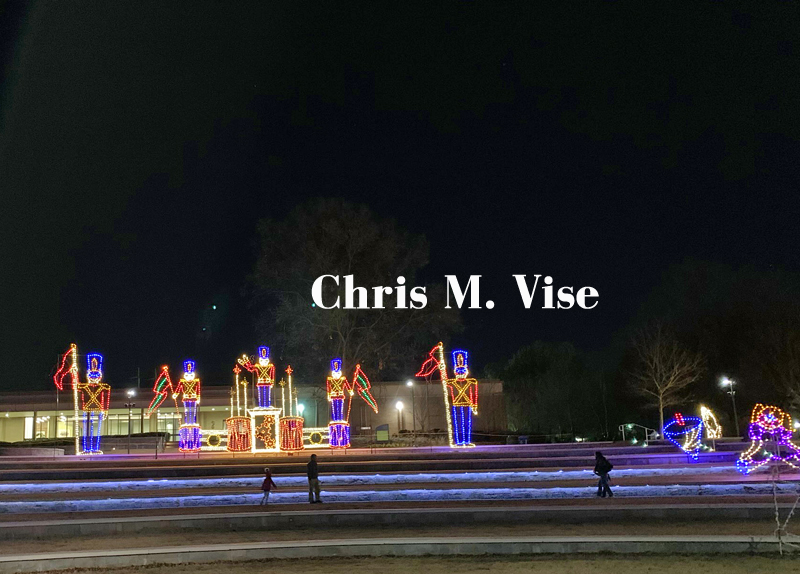
The Christmas light display known as "The Light Of Life" have been around for many years, but I had never been until this year. It was not what I was expecting and I mean that in a good way. In a time when holiday light displays are over the top, jammed with cell phone staring zombies and price gouging; this was a nice step back in time for me.

December 2019. Photo by me.

The experience had a retro feel like I was walking in a landscape from a 1980s music video. All I needed was Mannheim Steamroller's snazzy version of Deck The Halls playing to make it complete. The feeling it gave me had its charm and appeal. If you go with that mindset, you will not be disappointed. It is not the Instagram influencer, glitzy scene and for that reason alone, it was worth it to avoid those types.

December 2019. Photo my me.

December 2019. Photo by me.

December 2019. Photo by me.

The temperatures were in the thirties so the cold weather added to the night. It was fun to walk around at my own pace without feeling like cattle through the displays that are spread over a few acres of the Life University campus. 

December 2019. Photo by me.

December 2019. Photo by me.

December 2019. Photo by me.

It was not busy, but not enough people were there to not make it seem dead. The smaller crowd made it easier to take my time and wander through the displays without feeling rushed. It was peaceful and relaxing compared to other light displays that attract the bigger crowds around North Georgia.

December 2019. Photo by me.


December 2019. Photo by me.

December 2019. Photo by me.

It is also reasonably priced at ten dollars per vehicle when many of the more extravagant displays *cough botanical gardens of Atlanta* charge between $30 and $50 per ticket and offer silly premium VIP packages to see Christmas lights, like it is some kind of spa/healing experience. A fool and his money, I say.

Monday, May 20, 2019

Attending: Art AIDS America


Photo by me. May 2016


Thursdsay, I made the long and horrific drive from the city up to Kennesaw State University. It had been a couple of decades since I had been on the Kennesaw campus, but the art museum hosted a show to draw me back. 


I went to see the Art AIDS America exhibit at the Zuckerman Museum of Art. I have been to too many shows to count, but never once have I cried until this one. Thankfully, the museum knows how devastating this exhibition is and has provided boxes of tissues on benches. By the end I was ready to run far and away. It is staggering the losses that took place in the 1980s and 90s. I remember that time well growing as a member of Generation X.

If you are looking for big names to see it contains work by Robert Mapplethorpe, Annie Liebovitz , Keith Haring and others.

The show closes on the 22nd, this Sunday. It's also free. This is the kind of show the High Museum would never have the courage  to put on. The next stop on the tour is the Bronx Museum of Arts.

Thursday, April 11, 2019

The Changeling - An Elegant And Understated Ghost Story


A

s a child The Changeling like The Shining terrified me. The scenes of the drowning boy under the water in the bathtub scared me enough to have me cover my eyes. I first saw the film in the early 1980s one summer evening on HBO after coming home from my brother's baseball game at the local ball field. Decades later this movie doesn't terrify me as an adult, but I do appreciate and like it more. This is a fine movie that has aged very well in today's age of fast editing gimmicks and over-used CGI cheap tricks employed to scare audiences. This stylish and interesting film has suspense, mystery and acting.  


The Changeling is a 1980 Canadian film about a murdered boy who haunts a Victorian Seattle mansion of a classical music composer. The composer John Russell is played by legendary actor George C. Scott. When Scott discovers the haunting he finds more than a ghost and he sets out to uncover the mystery behind the haunting. The ghostly boy gives him clues that lead to a politician. 


John Russell came to live in this mansion with ghosts from his own past. His wife and child were killed in front of him while on holiday on a snow covered road. John decided a change of scenery would help him move on with life. He leaves New York and moves to Seattle to teach music at a university and compose in his spare time. He settles in a rented Victorian mansion that had sat empty for twelve years. His arrival reawakens the haunting.


As John follows the clues from the ghost he is aided in his research by Claire Norman who leased him the house through the local historical society. Claire is played by the real life wife of George C. Scott, Trish Van Devere. Together they unravel the mystery of ghost through a seance, research in libraries and digging up an old well hidden beneath a house.

The drowning boy turned ghost in The Changeling.


The movie is your classic haunted house story involving a ghost, banging doors, and breaking glass. There are some wonderfully scary moments in the movie such as the red bouncing ball coming down the stairs, the burning staircase, the drowning boy in the bathtub and the wicked child-size wheelchair chasing after Claire. 


This is an imperfect haunted house movie that is very good and almost great, but not to the level of greatness of say The Shining or The Exorcist. The Changeling filmed in 1978 and 1979, but not released until 1980 looks and feels more like a 70s movie than an 80s movie. It also was released the same year as the The Shining which again looks more like the 1970s than the 1980s. 1980 was a year of some good to great films that were produced at the end of the 1970s such as The Coal Miner's Daughter, The Elephant Man, Ordinary People, Raging Bull, Fame and Brubaker.

George C. Scott in front of the mansion from The Changeling.


The Changeling has the moody locale, the drab and dark interiors, the suspense, a couple of scary surprises, an interesting story, a fantastic soundtrack and some believable acting in it. George C. Scott seemed stiff in his acting as the movie begins, but as it unfolds and the tension and drama increases his acting seemed more relaxed. A couple of times his looks of disbelief at what is happening around him are realistically funny and stellar. It is no fault of Scott, but I do wish his role was written to convey more feelings of terror and fear at the ghost. The character of John is a bit cold and manages to stay too logical and rational given all the supernatural events - the screaming was saved for the role of Claire. 


I do love this movie because I enjoy a good, suspenseful haunted house movie. I love movies set in old mansions that have been closed up for years and need to reclaimed and explored by humans. I can smell the old wood and the dust. Old houses have a certain smell about them and they remind me of my family's old rock house set out in the lonesome countryside of Tennessee overlooking the fields and the river. Once you smell that aged wood, dust and stale air you never forget it. 


The movie is based on an alleged true story by playwright Russell Hunter. Hunter lived in an old mansion in Denver in the late 1960s and claimed it was haunted by a the ghost of a young boy. The same as the movie, the ghost gave clues as to where to find a certain item buried underneath a house. I believe in ghosts, I have seen two in my life, but this story seems a little farfetched for reality, but not a movie.

The wonderful styling of Trish Van Devere in The Changeling.


Normally I do not comment on wardrobe, hair or makeup in a movie, but this time is an exception because it was so well done and stylish. The wardrobe, hair and makeup on Trish Van Devere are impeccable. She looks stunning throughout the movie. The clothes she wears in nearly every scene have her dressed to perfection and her hair looks so good whether they style it up or down. Her wardrobe is so chic and sophisticated that it was a pleasure to watch her. Also that timeless Burberry trench coat that George C. Scott wears in the film had me lusting for that too. 


If you are hoping for a heart racing and frantic film then the pace of The Changeling will be too slow to keep your attention. The attention span of today's audience weened on news feeds, selfies, jump cuts, explosions and fake curated lives may however be bored by this movie. So if you like the action hero Hollywood crap of today this is not the movie for you. This movie is from a time when entertainment was a helluva lot more intelligent, sophisticated and elegant than the soul crushing junk of today.

Tuesday, March 26, 2019

Render Unto


The kitchens, woods and barns of small towns can hold as many and as lurid secrets as a city can cloak on its avenues and in the tall apartment towers. In a small mountain town in West Virginia is the love quadrilateral of Sidney, Brian, Gareth and Roy the mastermind pulling the strings of everyone.

Roy is known as "the renderer," which sounds so ominous like a serial killer or a grotesque monster. It also brings to mind religion with the phrase, "render unto Caesar the things that are Caesar's, and render unto God the things that are God's," from Matthew 22:21. However, even though there are overtones of religion in this book the rendering refers to the act of rendering fat to make soap. Roy was the son of a renderer from the wrong side of the tracks in this small town. Roy as defined by the judgements and prejudices of others in this town was never going to be good enough for them and especially for Sidney therefore he would always be known as the renderer as a mark against him.

Roy would certainly like to have Sidney rendered unto him and therein is the plot of Narrow Rooms. Growing up Roy developed an obsession with Sidney and he never let that fade into his early adult life when this book takes place. Sidney was the football star of this town, from the right side of the tracks and held a secret that Roy would use to his advantage when he could in the form of sexual trysts with Sidney in cornfields and the showers. Despite the secretive trysts Sidney never humanizes Roy and so he publicly rebukes him at the end of high school. This event so deeply scars Roy that he spends the rest of his life planning his revenge on Sidney. He cultivates a long range plan involving other young gay men in this town to enact his revenge on Sidney and render him unto Roy. To achieve this goal there will be murder, arguments about class, the ascension of Roy to wealth and power and sex in this ever spinning love quadrilateral between Roy, Sidney, Gareth and Brian. This story could have quickly turned into a raunchy romp in the hills, barns and roadsides of rural America but Purdy keeps it from veering too far off into campy territory and he deserves respect and admiration for that.

Wednesday, March 20, 2019

A Trophy

S

aturday evening I sat down and cracked open a copy of Norman
Mailer's Why Are We In Vietnam? published in 1967 and finished reading it by Sunday morning. I was thoroughly engrossed by his novel about the male ego and how it got us deeper into the mess of the Vietnam War told through a hunting trip in Alaska.

Anytime I put up my feet and read now I always think of my teenage nephew who asked me a couple of months ago in all seriousness, "why read a book?" Without hesitation I replied, "to learn and maybe be entertained." Why Are We In Vietnam? managed to do both so by that measure I liked it, now if only I could get my nephew to read a book.

At first, I found the novel unapproachable as Mailer writes much of it in a slang/jive talk/stream of consciousness manner. I kept thinking what have I gotten myself into and what the hell is this but I was able to overcome my misgivings and the book settles down into a more proper use of the English language intermixed with the jive talk. The humor that comes with the jive talk is off-putting as it is crude and completely politically incorrect and inappropriate even by late 1960s standards but I did find some of it funny I admit. A famous author such as Mailer could not get a book published like this today and probably would not even attempt it because of the backlash it would receive over the language. That's a shame, because to focus on the language and offensiveness would be to lose the message of the book and censorship has no place in a civil society.


The plot of the book is narrated in flashback by an eighteen-year old from Dallas, Texas named DJ. He also has a split personality sharing the narration with a black kid from Harlem. You never know which personality is the real identity of the narrator or whether you are listening to playback of the entire story on God's great big tape recorder of life. Mailer goes on a bit of mind fuckery to make you think about perspectives.

DJ is the son of a wealthy businessman from Dallas. His father is the epitome of the corporate male ego concerned about status, wealth and his fragile male ego. The book told mostly in flashback takes place two years earlier when DJ is sixteen and involves a hunting trip to kill big game in the Alaskan bush.

DJ's close friend Tex is along on this trip along with two underlings of DJ's father. The male adults are all referred to as "assholes" and are respectively labeled to what degree of an asshole they are. The underlings are there so that DJ's father can assert his dominance in the wild and impress upon them that he is the man they should admire. Lots of chest thumping, dick measuring and gun worship takes place on the trip. Grizzly bears are the coveted kill, the trophies they seek and it is as a major focus of the trip.

Near the end of trip in Alaska DJ and Tex take off on their own adventure into the wild to prove to themselves that they are greater and stronger than the wild Alaska nature they are in. You might think of soldiers in Vietnam going AWOL into Cambodia. During their bonding in the wild alone the two boys have an inmate moment in which DJ grabs Tex's cock as they cuddle close to stay warm. Yet, Mailer cannot seem to get these two characters who are in some sort of love to copulate. His words will not take these two characters there and instead he has them burst forth with violence and wanting to kill, kill, kill. Perhaps this was a comment by Mailer about the violence caused by the repressed desire of male on male sex.

None of the book takes place in Vietnam and it is not even mentioned until the very last sentence of the book. Vietnam is only the subtext of the novel to which this romp in the Alaskan bush is set. This book is about how the male ego, hyper-masculinity, a drive to kill, to conquer rather than to admit the mistake that was Vietnam. The male ego does not handle failure very well so rather than retreat the machismo leads you deeper into a violent conflict that was a mistake from the beginning because we needed to save face and win a trophy called Vietnam. The book is as relevant today as it was in 1967.


Tuesday, March 19, 2019

Another Day, Another Door

This week I opened up some of my storage boxes in an upstairs closet looking for hints, clues and help to understanding parts of my youth. There are answers I need and I am lucky to still have some portions of my younger life packed away in boxes that have moved around with me. It is a collection of documents, keepsakes, and other odds and ends that have survived moves to other states, a flooded basement and time.

I knew I had a manila folder packed away of all my poetry that I had written by hand in the early and middle 1990s. I had not seen or read these poems in twenty years. I did not want to read them, I could not read them because of what they contained was pain, immense pain. I had dared not to open those wounds for what it might unleash on me, but at this point in my effort to better understand where I was and who I was so that I might finish this book they had to be read and looked at with my now more mature eyes.

Reading my words dating back to 1993 in these poems I am surprised that I made it through that. There are many lines written that contain imagery and references to death and some form of romance I had with it then. They were not dramatic references to death, but quite accepting of the idea instead. Plenty of nature references are in there which for me is very true to the person that I am - the nature lover. Some of what I wrote was of course undeniably bad and thankfully never saw the light of day. I did realize that my mind was more open to new ideas in my early twenties which is a characteristic of youth, but some of the humor that I possessed even in my darkest words made me laugh.

Monday, March 18, 2019

Junebug

Last night looking for a film to watch, I decided on Junebug. I was in the mood for a low-budget independent movie that was good and Junebug fits that description. I had seen the film only once, in 2005 at Lefont theatre in the Atlanta suburb of Sandy Springs. I had picked the movie at random that day as I was looking to kill some time and Junebug turned out to be a fine way to do it. I enjoyed the film the first time and enjoyed it more in a second viewing fourteen years later.

The plot of the movie could have easily been a cliched take on big city people from up north visit a small southern town and point a finger at how backwards these hicks are but this film isn't that. The disparities are obvious between the two lifestyles and there are peculiarities noted but they never originate in the need for cheap laughs.

You have the character of George and his wife Madeleine visiting North Carolina from Chicago when the air is ripe with humidity, the lawns are deep green and the crepe myrtles are blooming. Madeleine is an art gallery owner and she is interested in obtaining the rights to exhibit and represent the folk art of a southern eccentric character named David Wark (think Howard Finster from Georgia). It so happens that this artist lives near the family of George and so he and Madeleine visit and stay with his family that he only sees every so many years.


Madeleine and George

George, a business man of some sort as the film never explains, is cautious about how his family will react to his sophisticated wife and how his wife will react to them. He seems more concerned that his wife will pass judgement on him based on his family and from where he comes.

Living with George's parents are his under-achieving younger brother and his pregnant wife. George and Madeleine are still newlyweds, note none of his family were invited to the wedding, and this will be the first time everyone meets. The film is very much a character driven movie with some wonderful acting in rich characters.

Madeleine for her part does her best to reach out to George's family and not to pander to them. She has a genuine interest in who these people are but finds them hesitant to return that interest other than George's sister in law. Later in the movie, she does struggle with balancing her business interest in the folk artist and maintaining interest in her husband's family and a choice of which comes first must be made.

George and his mother.
George's father is a man of few words, almost detached from the world in a borderline state of dementia it seems, and is obsessed with woodworking. He enjoys building wooden birdhouses and birds and has built a cradle for the grandchild on the way.

His mother is played by Celia Weston. This character is the chain smoking, strong-willed southern woman that likes a very tidy house and she dominates everything that goes on inside it. Celia Weston's acting is incredible in this role and she made the most of every scene that she was given.

The movie only cost a $1 million to make and was a sleeper that did turn a modest profit at the box office. Large sums of money does not mean quality as you can see from almost every movie produced in Hollywood with ridiculous budgets. A film such as Junebug again proves that independent film-making on a small budget doesn't mean poor quality. Though released in 2005 this almost feels like the independent films of the 1990s that I love. It could just be that cell phones rarely appear in this movie and social media does not exist yet.

The film would garner a Oscar nomination of Best Supporting Actress for Amy Adams who plays the pregnant sister in law of George. Adams was excellent in the character that talks incessantly and is eternally optimistic and curious about life. Her performance steals the movie though I think Celia Weston as the mother might have been better but her character is not as likeable.

Some might think that the accent of Frank Hoyt Taylor, playing the role of the eccentric artist, is overdone and is a horrible imitation of the southern accent. However, there are many varieties of the southern accent as I have mentioned before. His accent in the movie is one you would hear in the mountains of the Appalachians. I would hear this accent fairly often where I grew up in the foothills of the mountains in Georgia. The actor playing the character was born in southwestern Virginia so I would say he would know how this accent correctly sounds. Another example of this accent is how Levon Helm sounds in the role of Loretta Lynn's father in the film The Coal Miner's Daughter set in the mountains of eastern Kentucky.

I saw much of what I had seen or experienced as a southerner from a small town, turned big city inhabitant represented in this movie. Present in the film is the influence of small town religion, the complicated parental relationships, sibling rivalry, the detachment from one's roots where you harbor some inadequacy that exists in direct conflict and with a duality of a pride in where you come from and where you've escaped to as an adult and this film manages to confront these issues without mockery.

This is one of the better films that relies on the juxtaposing of city and rural people and their differences. It doesn't fall into the traps of mockery, exploitation or pandering that most television shows and films seem to lazily follow like a bad recipe. The writer of the film Angus MacLachlan, from North Carolina, displays a respect for his characters and the lives they lead whether they work in a warehouse like George's brother or are Chicago gallery owners. So forget all the nonsense horseshit of blue-state versus red-state and watch this intelligent film full of nuance.

When the films ends, you realize that a person might sometimes miss their hometown and might find a need or reason to visit but you are reminded in the end why you left to begin with though some part of you will never leave it. As George and Madeleine drive way to return to Chicago, George shakes his head in amazement and says, "I'm so fucking glad we're outta here."